Climate Action

How Rewetting Peatlands Connects Agriculture, Climate Action, and the Economy
Anna Maria Link

Aug 3, 2026 - 9 min read

What was drained for decades is now being returned to water. Drained peat soils account for around seven percent of Germany's greenhouse gas emissions. This places peatland rewetting at the heart of the question of how agriculture, climate action, and economic opportunity can be advanced together - a question explored by the BMW Foundation Herbert Quandt's Werkstatt des Wandels in Nantesbuch. 

Some landscapes read like history books. You simply have to learn how to read them. Visitors to Nantesbuch, in the foothills of the Bavarian Alps, see meadows, forests, and peatlands - a landscape that conveys a sense of tranquility. Little suggests that immense forces have shaped this place over thousands of years: ice, water, and, ultimately, human activity. "After the last Ice Age, this was a vast lake," explains Lorenz Bücheler, Head of Nature and Landscape at Stiftung Kunst und Natur Nantesbuch. As the water gradually receded, peatlands began to form. Over thousands of years, dead plant material accumulated under permanently waterlogged conditions. Centimeter by centimeter, a soil developed that now ranks among Europe's largest natural carbon stores. 
Aerial view of a dense forest canopy with varying shades of green and brown, showing a mix of trees and vegetation.
Aerial view of forest and peatland on the grounds of Stiftung Kunst und Natur Nantesbuch.
Noel Laas
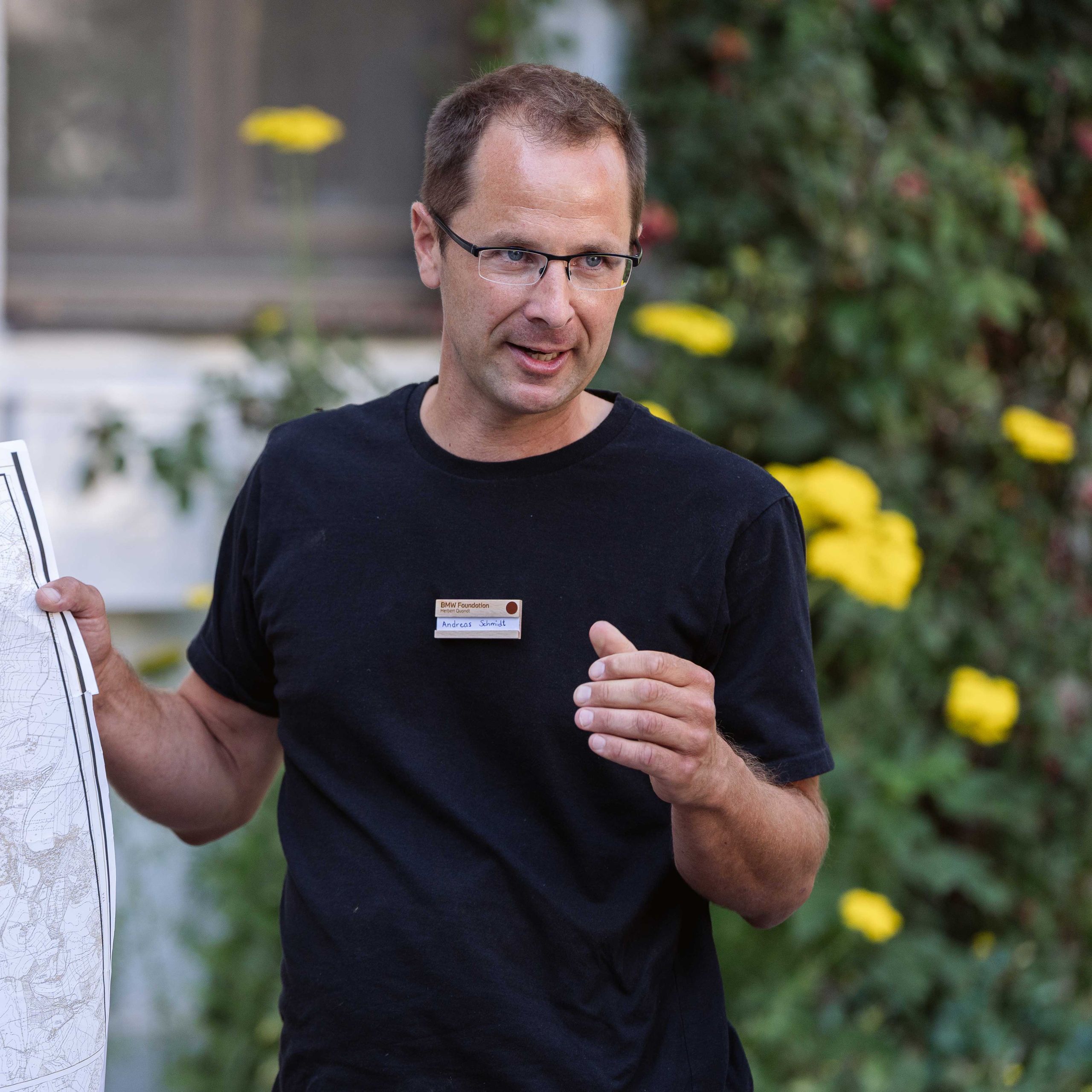
A man in a blue shirt points to a map on an easel during an outdoor presentation, with onlookers observing attentively.
Lorenz Bücheler, Head of Nature and Landscape at Stiftung Kunst und Natur Nantesbuch, explains the Nantesbuch site.
Noel Laas
For a long time, this was seen as a problem. Peatlands were wet, difficult to farm, and considered to have little economic value. So they were drained. Ditches were dug, drainage systems installed, and land made arable. What was once celebrated as an engineering achievement continues to shape entire regions today. For generations, farmers learned to remove water from the soil as quickly as possible.Today, the task is suddenly the opposite. Water is to return to the landscape. Ditches are being closed, drainage systems interrupted, and peatlands rewetted. What once represented progress is now widely regarded as a prerequisite for effective climate action. Few issues illustrate more clearly how profoundly our understanding of agriculture has changed. It is no longer only about food. It is about water. Energy. Biodiversity. Carbon. And the question of what economic value all of these may hold in the future. 
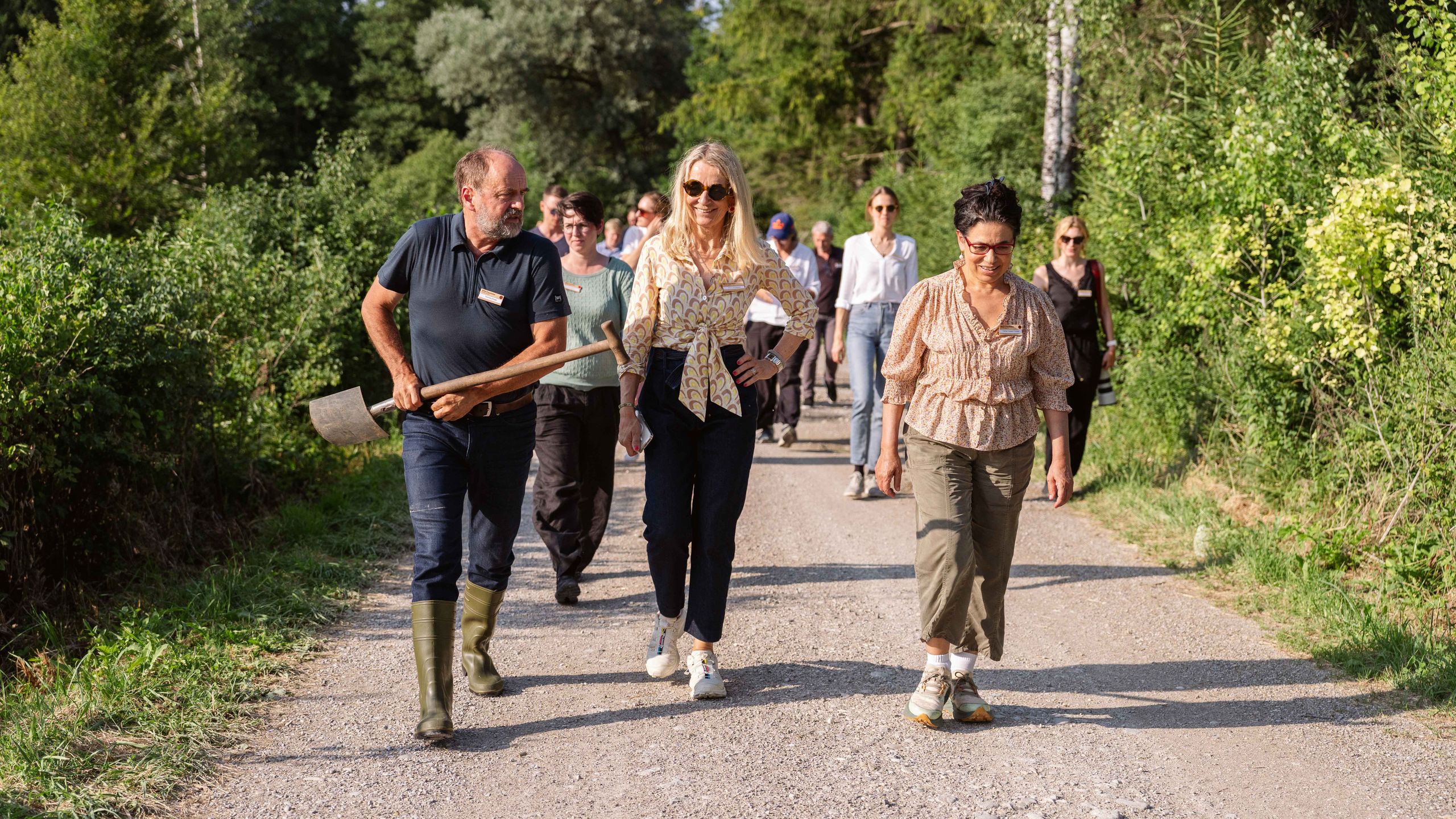
A group of people, including a man with a shovel, walk along a tree-lined path on a sunny day.
Participants of the Werkstatt des Wandels during a field visit to the peatland.
Noel Laas
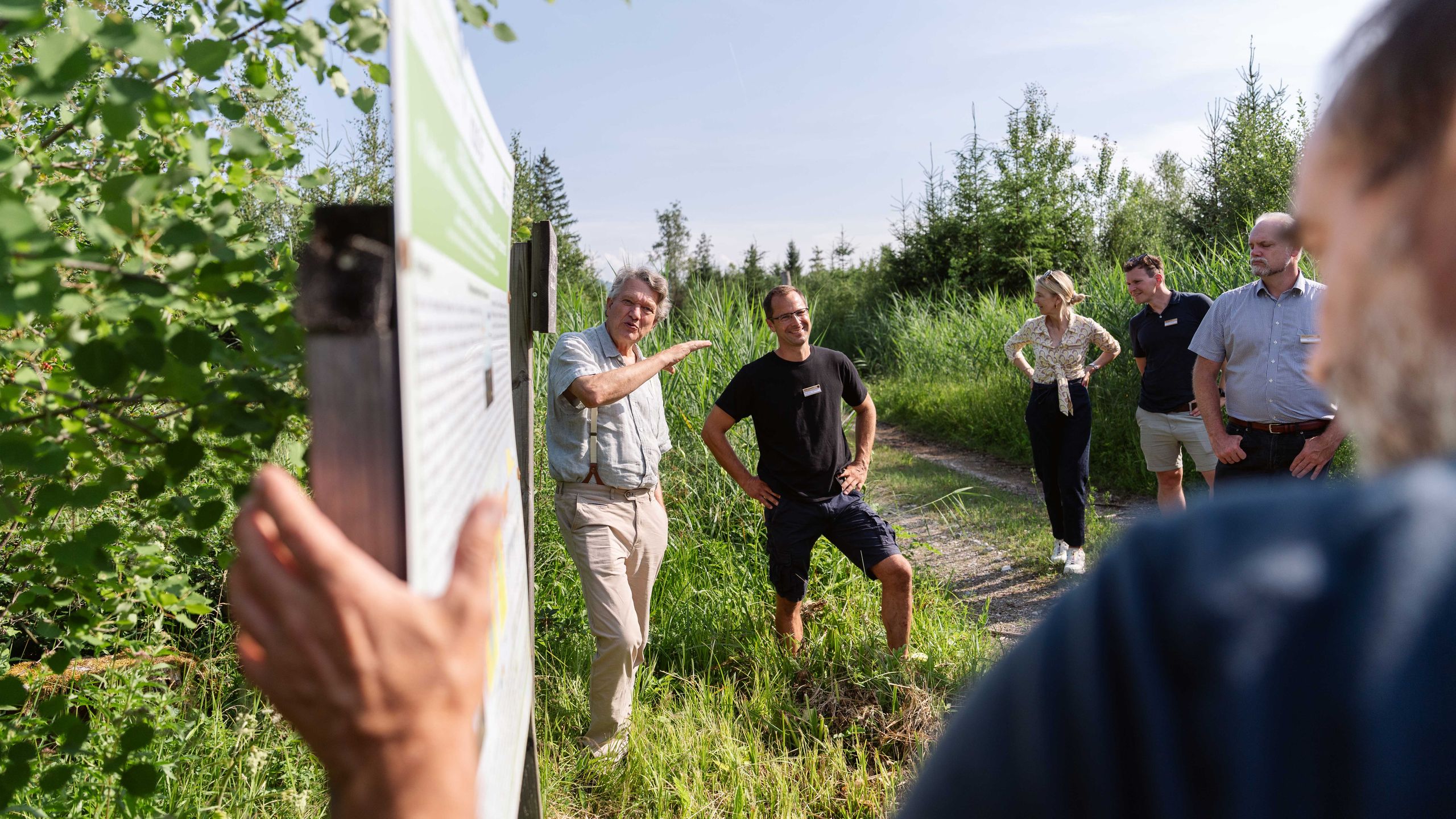
A group of people stand on a grassy path in a wooded area, listening to a person pointing at an informational sign.
Participants in the Werkstatt des Wandels at the Mooseurach ICOS measurement station, an associated observation site of the Integrated Carbon Observation System (ICOS) operated by Weihenstephan-Triesdorf University of Applied Sciences (HSWT).
Noel Laas
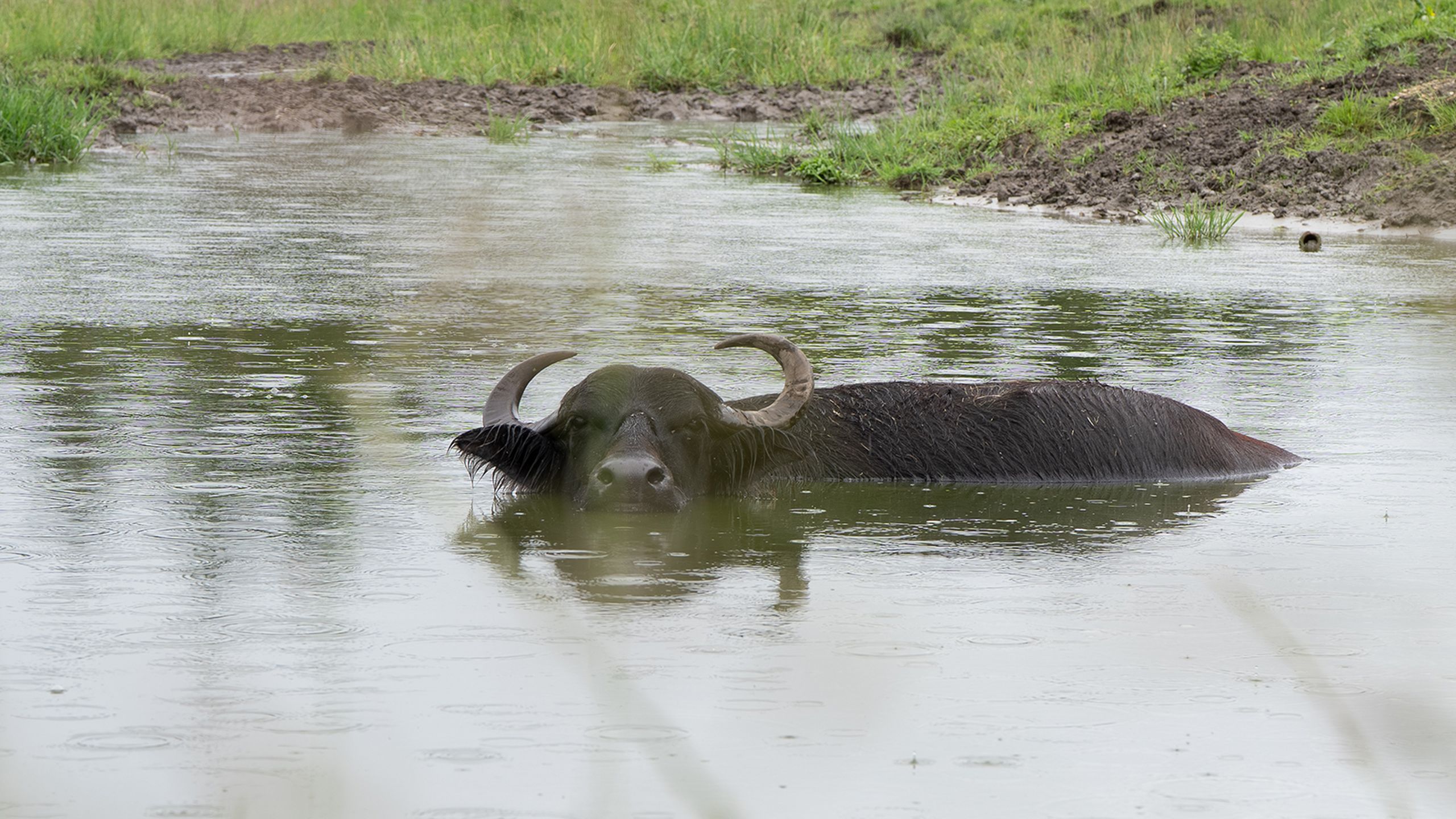
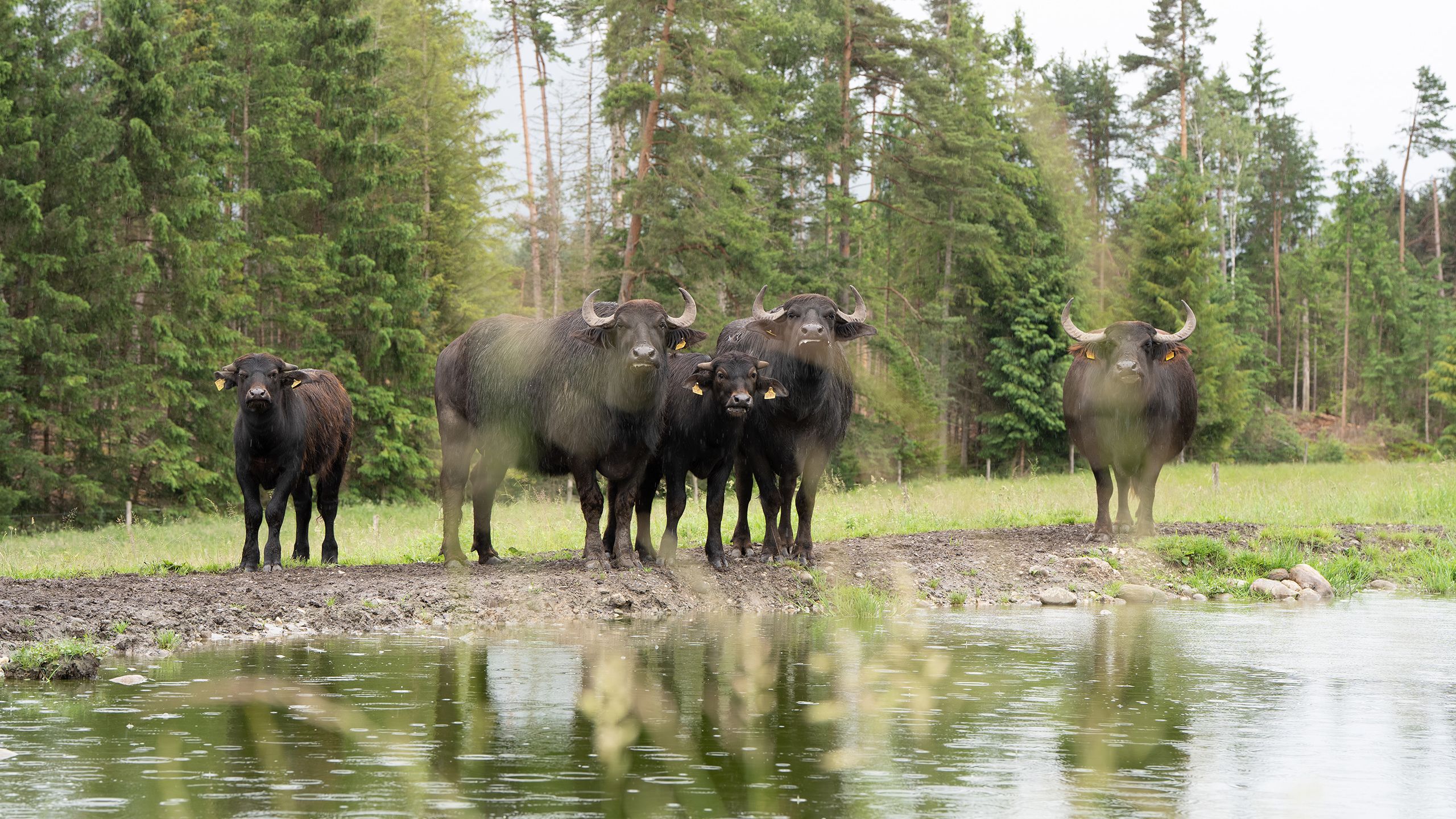
Water buffalo submerged in a muddy pond, with only its head and curved horns visible, surrounded by grassy landscape.
Water buffalo on the grounds of Stiftung Kunst und Natur Nantesbuch.
Noel Laas
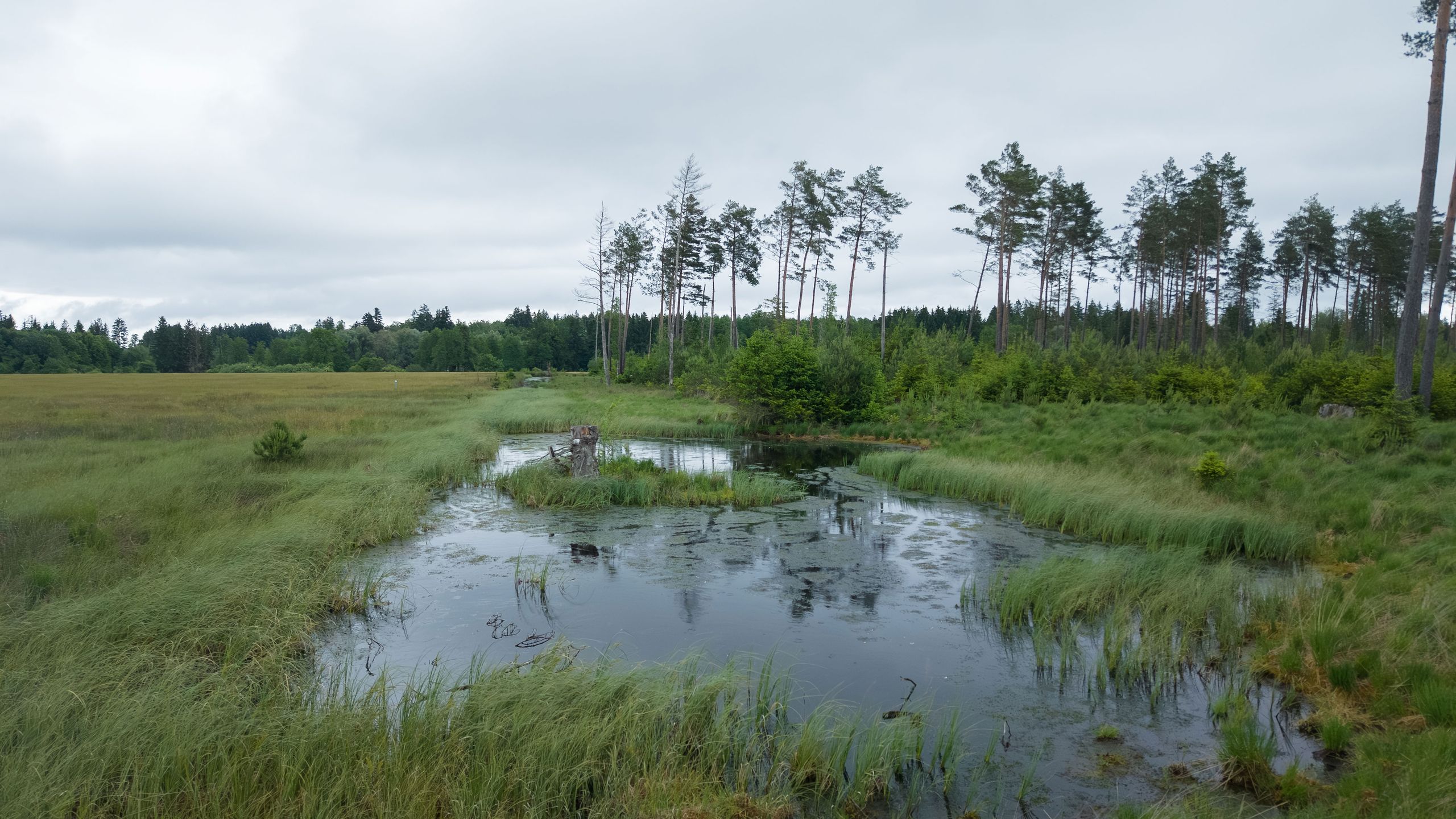
A serene marshland with tall grasses surrounding a still pond, bordered by sparse trees under an overcast sky.
Wetlands in Nantesbuch.
Noel Laas
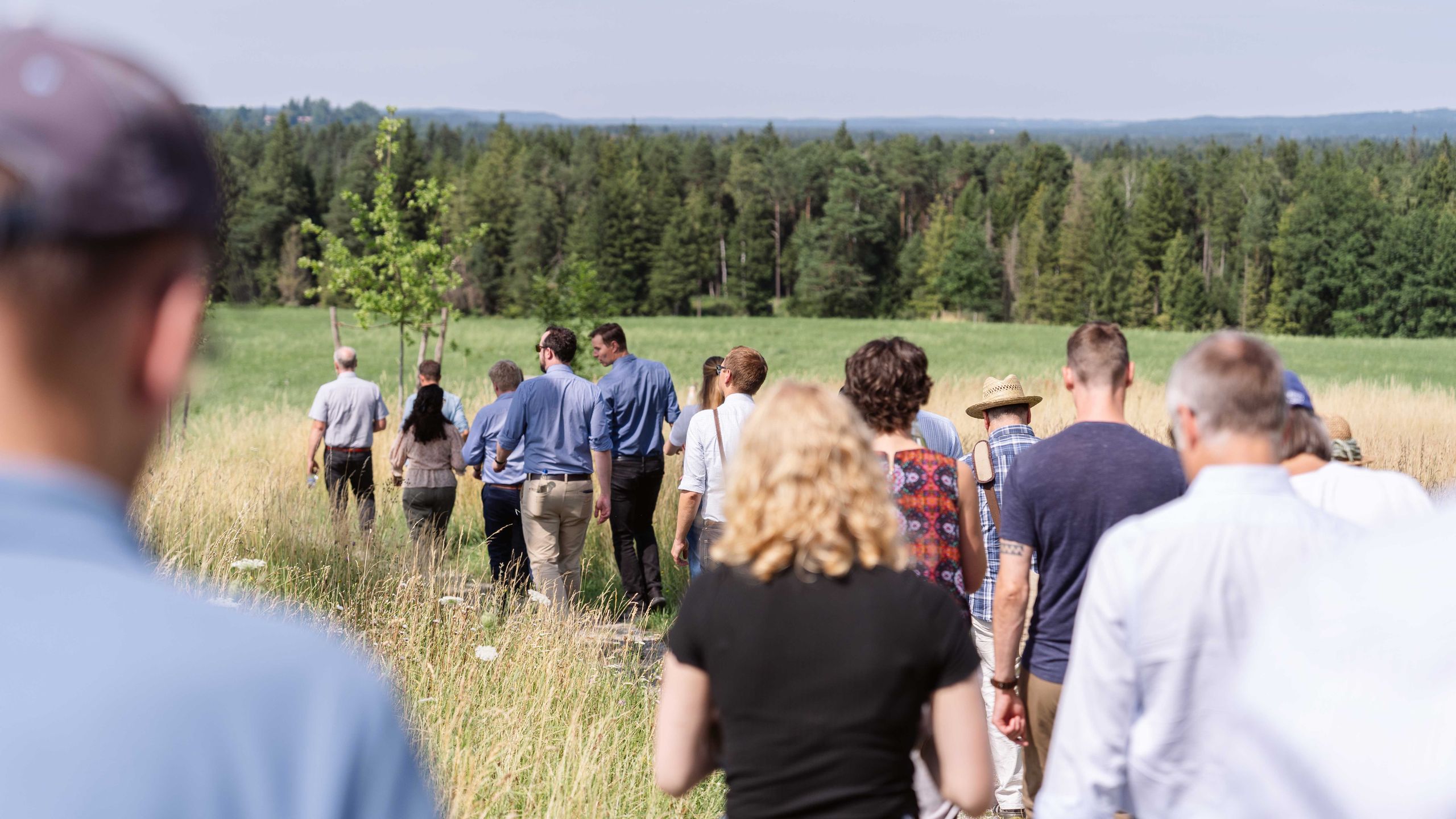
A group of people walking through a grassy field towards a forest in the background under a clear sky.
Participants on their field trip.
Noel Laas
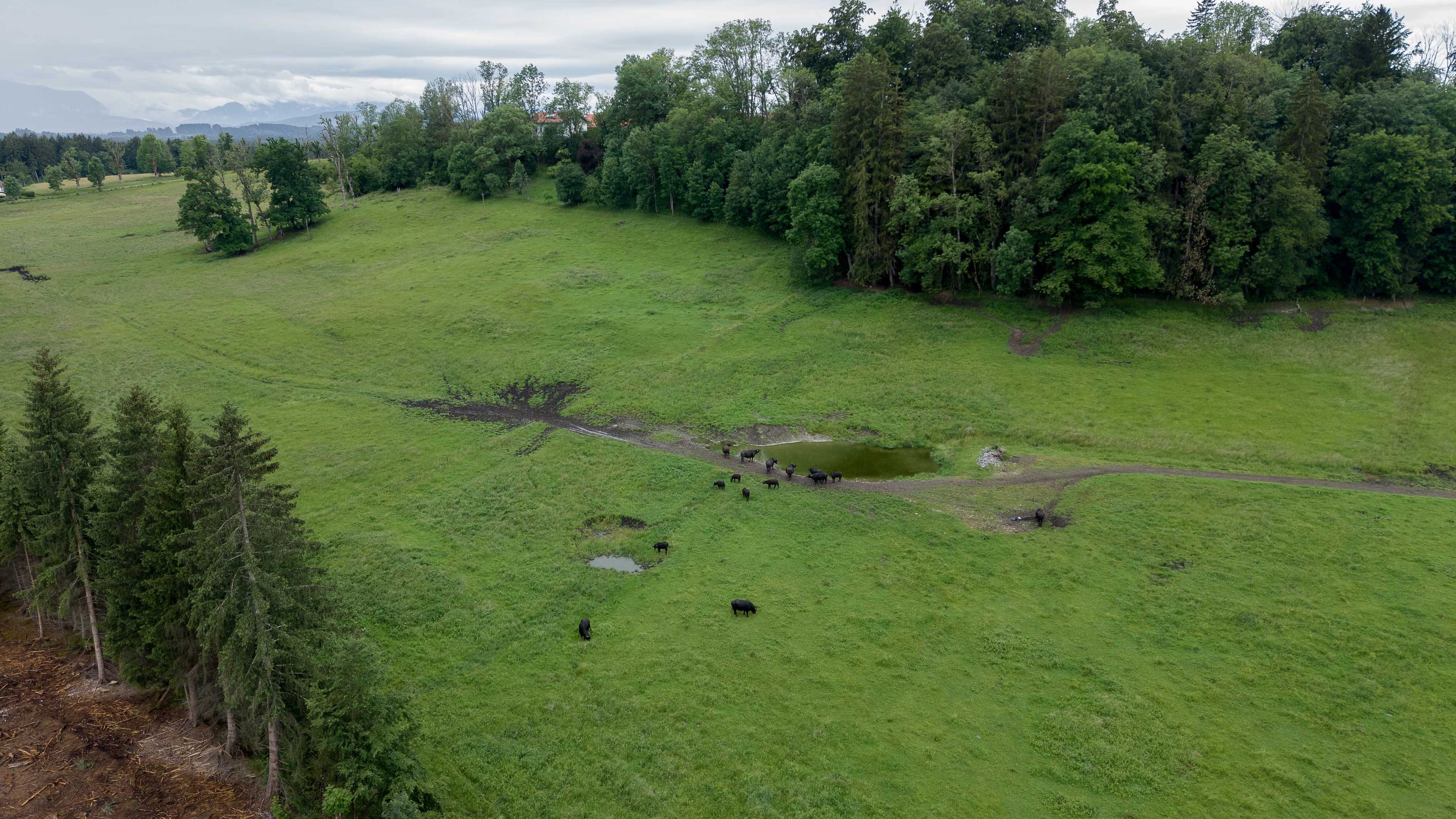
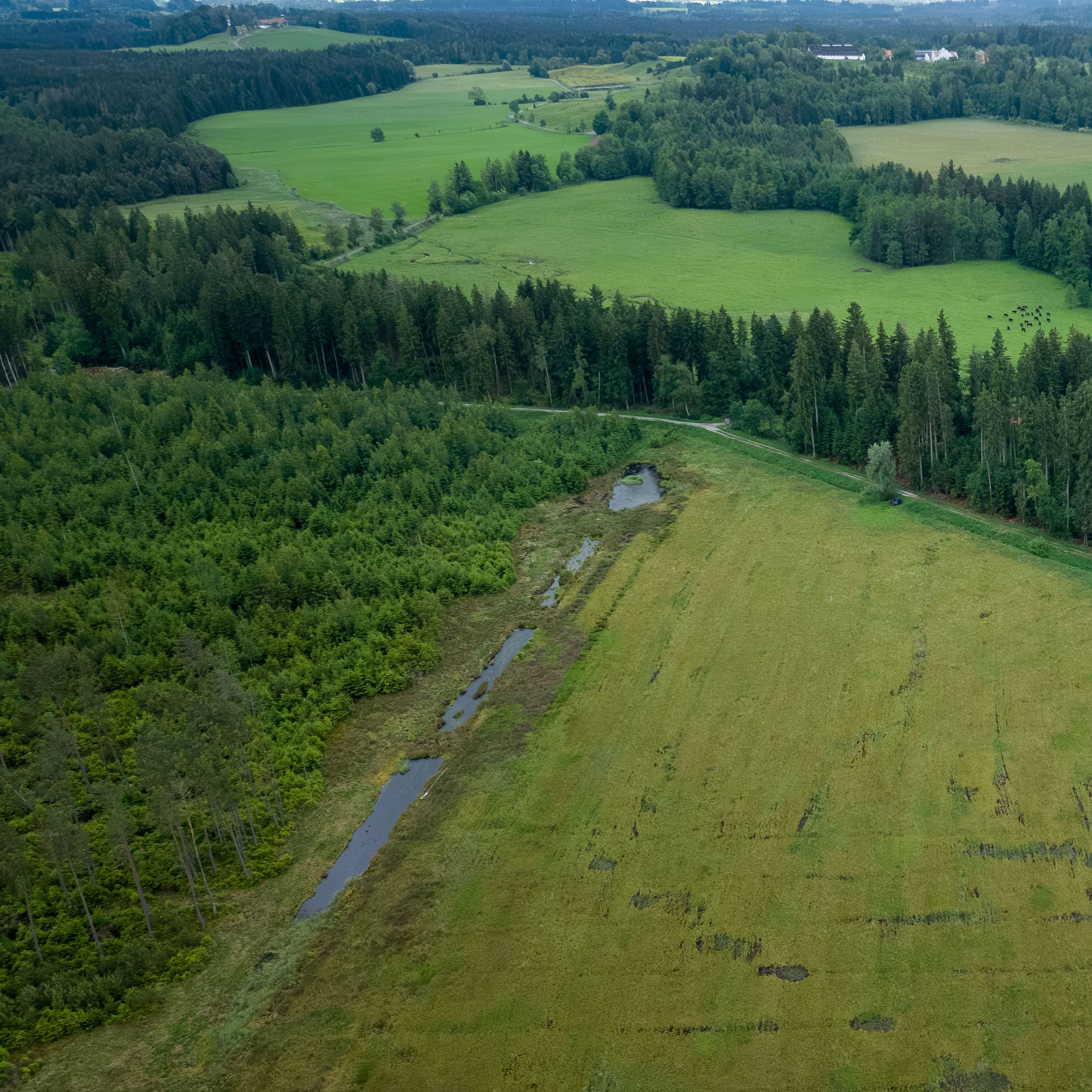
Aerial view of a lush green pasture with a small pond, scattered trees, and a few grazing cows, bordered by a dense forest.
Aerial view of part of the Stiftung Kunst und Natur Nantesbuch site.
Noel Laas
This is precisely why representatives from agriculture, science, business, and government accepted the BMW Foundation Herbert Quandt's invitation to gather at Stiftung Kunst und Natur in Nantesbuch in July. Werkstatt des Wandels is a forum where different perspectives converge, conflicting objectives are addressed openly, and new solutions are developed together. At the center of the discussion was a question that extends far beyond the Bavarian Oberland: Can agriculture produce food, generate energy, protect the climate - and remain economically viable at the same time? Some answers can be found just a few miles away. At Gut Mooseurach, Andreas Schmidt stands on a piece of land that appears unremarkable at first glance: grassland intersected by drainage ditches. To him, however, it represents one thing above all: a turning point.

Werkstatt des Wandels

Germany is undergoing profound change. Industry, energy systems and entire regions are being reshaped by decarbonization, digitalization and a world marked by growing geopolitical and economic uncertainty. The Werkstatt des Wandels brings people to the places where this future is already taking shape.  In 2026, the series will visit key locations at the forefront of the energy transition, industrial transformation and digital sovereignty. We will explore one defining question: How can transformation strengthen economic prosperity, social cohesion and democratic resilience at the same time?

Learn more
"We can already see that the land is deteriorating," says the farm manager at Gut Mooseurach. "The peat is degrading. The carbon is being released into the atmosphere. For us, the conclusion is clear: it needs to become wet again." Schmidt has managed the farm for many years. It comprises around 200 hectares of grassland, nearly 500 hectares of forest, organic farming, and direct sales. This is not an operation that chases short-lived trends. And yet he is planning something that would have seemed almost unimaginable only a few years ago: a peatland photovoltaic system on rewetted peatland - not as a replacement for agriculture, but as a complement to it. "The system will be installed on peat soil," Schmidt explains. "If you want to do that, it is only permitted in combination with rewetting. That combination is precisely what makes sense." At first glance, the idea seems contradictory: returning water to the peatland while generating electricity at the same time. In fact, it exemplifies a fundamental shift. Where different forms of land use were once pitted against one another - agriculture or nature conservation, energy or food - models are now emerging that pursue several goals at once: producing food where soils are suitable, generating renewable energy where it makes sense, protecting the climate through wet peatlands, creating new raw materials for construction and insulation, and providing agricultural operations with additional sources of income. 

"The peat is degrading. The carbon is being released into the atmosphere. For us, the conclusion is clear: it needs to become wet again."

Andreas Schmidt

Farm Manager at Gut Mooseurach

Schmidt knows there is nothing romantic about this. It involves new permits, new partners, new risks, and significant investment. "First and foremost, I am a farmer," he says. "I was surprised by how much is involved and by the difficulties hidden in the details." The greatest change, therefore, is not simply a new technology. It is a new role. In the future, agriculture will no longer be expected solely to produce food. It will also generate energy, store carbon, retain water in the landscape, and preserve habitats. This task is larger than any single farm and larger than any individual peatland. Ultimately, the discussion in Nantesbuch is about the future value of soil - not merely as productive land, but as infrastructure for the climate transition. A debate is therefore beginning in the peatlands that extends far beyond agriculture. It concerns energy supply, industrial policy, regional value creation, and how we manage a resource that, for decades, was expected to be one thing above all: dry. 
Aerial view of a grassy field with light green and brown patches and faint tire marks creating diagonal lines across the landscape.
Aerial view of peatland on the grounds of Stiftung Kunst und Natur Nantesbuch.
Noel Laas

Why Germany's Soils Are Becoming Strategic
To understand why a farmer such as Andreas Schmidt is considering rewetting peatlands, it is necessary to look beyond the individual farm. The story does not begin in a field. It begins beneath the surface."Peatlands have developed over thousands of years," says Matthias Drösler, Professor of Vegetation Ecology at Weihenstephan-Triesdorf University of Applied Sciences. "They store enormous amounts of carbon - more than any other terrestrial ecosystem." As long as a peatland remains wet, that carbon stays locked in the soil. Once the water disappears, however, the peat begins to decompose. A carbon store becomes a source of emissions.Although peatlands account for only a relatively small share of Germany's land area, drained peat soils are responsible for around seven percent of the country's total greenhouse gas emissions. "That is more than all intra-European air travel combined," Drösler notes.

"Peatlands have developed over thousands of years. They store enormous amounts of carbon - more than any other terrestrial ecosystem." 

Matthias Drösler

Weihenstephan-Triesdorf University of Applied Sciences
The conclusion seems clear: any serious approach to climate action must address land use. Yet this is precisely where the real conflict of objectives begins. Peatlands are not only habitats. They are often also agricultural land, cultivated by families whose farms have operated on drained soils for generations."It is important to remember that people did exactly what policymakers wanted them to do at the time," Lorenz Bücheler explains. Peatlands were drained to create arable land and grassland. This was considered progress, supported by public funding, and presented as a success story for decades. Today, those same farms face an entirely new set of expectations. They are expected to retain water rather than drain it, store carbon rather than generate emissions, and remain economically viable in the process.For Drösler, this is the crucial shift in perspective. "We must not see farmers as the cause of the problem," he says. "They are the ones who can implement the solution." This idea ran like a thread through the discussions in Nantesbuch. The focus was not on sacrifice, but on how climate action can become a viable business model. Agriculture has long performed tasks that extend far beyond food production. It generates renewable energy, manages landscapes that retain water and support biodiversity, and - if the right conditions are in place - can contribute to one of Europe's largest natural carbon sinks.

Background: EU Nature Restoration Regulation

Since August 2024, the EU Nature Restoration Regulation has required Member States to progressively restore degraded ecosystems. Peatlands play a central role: the Regulation establishes specific restoration targets for drained peatlands under agricultural use for 2030, 2040, and 2050. Rewetting by farmers remains voluntary, and implementation will take place through national restoration plans.

"In the end, the economic outlook is what matters. When farmers see that a new form of land management works in practice, is supported by reliable demand, and provides a secure income, successful pilot projects can become viable business models," says Michaela Kaniber, Bavaria's Minister of Food, Agriculture, Forestry and Tourism. These same prerequisites were repeatedly emphasized in Nantesbuch: reliable policy frameworks, functioning value chains, and close cooperation between agriculture, science, business, and government. Only when these elements come together can individual pilot projects become solutions that work at scale. The greater challenge is creating new markets. The real question is no longer whether peatlands have value for climate action, but who is willing to pay for that value. 

When Climate Action Creates Economic Value
The idea of compensating farms for climate action and other services provided by nature is not new. Until now, however, it has largely been tested through funding programs and individual pilot projects. A broader question is now moving to the center of the debate: Can carbon storage, water retention, and habitat conservation become reliable sources of income for agricultural operations? "In the future, agriculture has the opportunity not only to produce food, but also to provide ecosystem services," says Jonas Galdirs, Managing Director of CO₂.regio. "These services have value - and that value must also be recognized economically in the future." These are services that have largely been taken for granted until now: storing carbon in the soil, retaining water in the landscape, and preserving habitats for plants and animals.As companies face increasing pressure to meet their climate targets, interest in these natural climate services is growing. For farmers, this could create new sources of income - not as a replacement for agriculture, but as an additional pillar of their operations. 

"In the future, agriculture has the opportunity not only to produce food, but also to provide ecosystem services."

Jonas Galdirs

Managing Director of CO₂.regio

Creating A Viable Business Model

Yet there is still a long way to go between this idea and its implementation. Markets do not emerge on their own. They require clear rules, transparent standards, and trust. Above all, they require farms that are prepared to pursue new approaches and policy frameworks that enable long-term investment. This is precisely where the different perspectives converged in Nantesbuch. Whether from science, agriculture, business, or government, one issue was raised more frequently than almost any other: planning certainty. Anyone who rewets land is investing for decades. Anyone who grows new crops or invests in peatland photovoltaics needs reliable permitting processes, functioning markets, and confidence that policy objectives will not be renegotiated with every election cycle. Participants in the Werkstatt des Wandels therefore agreed that the transition is being held back not by a lack of technology, but by a lack of structures capable of bringing it to scale. For Andreas Schmidt, this is not a theoretical debate. He must decide which investments his farm can sustain in the coming years. Whether new ideas are economically viable is not determined at conferences, but by the figures on the balance sheet at the end of the year.
People seated at long tables in a modern dining area, with two individuals presenting near a screen at the front.
Participants connecting over lunch.
Noel Laas
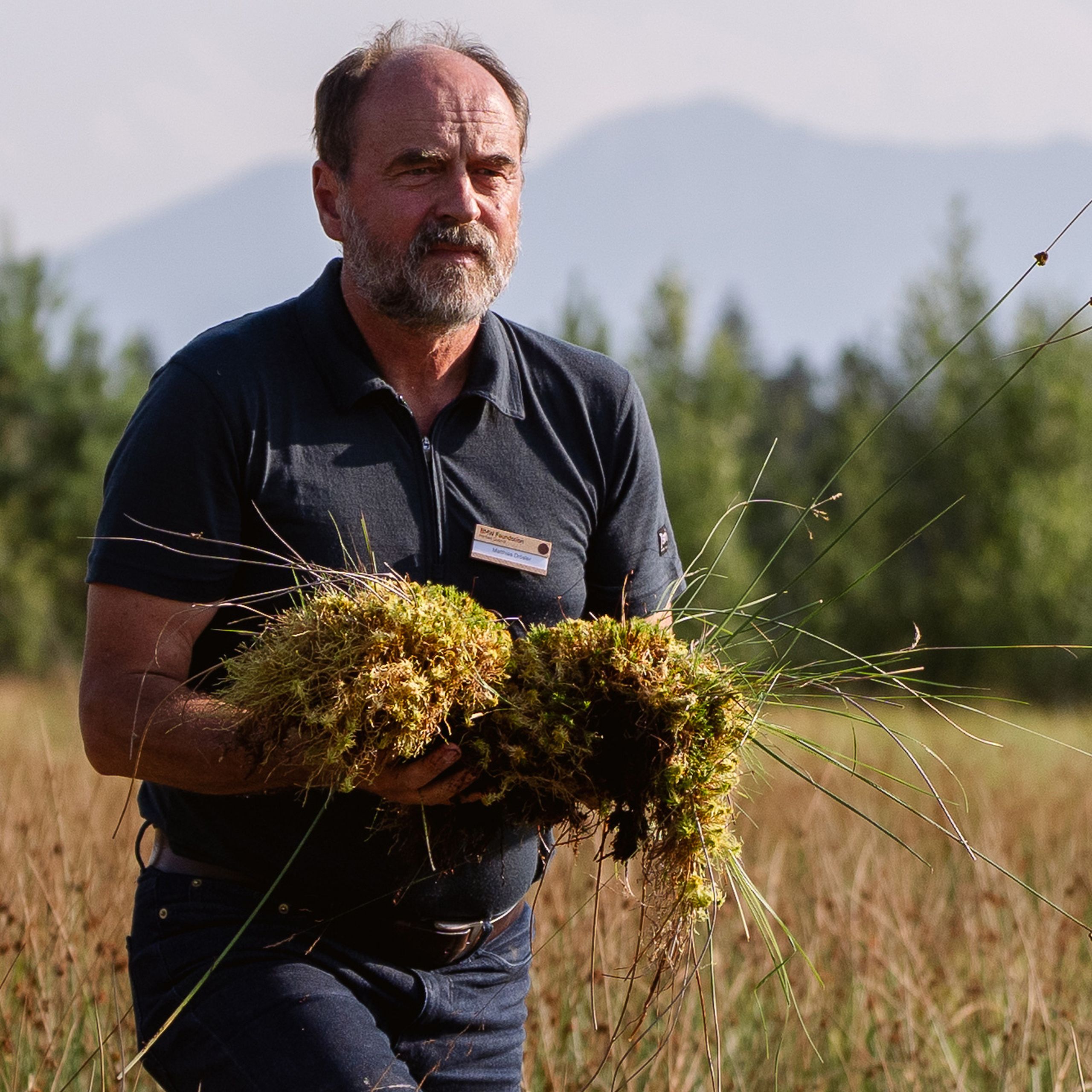
A person holding a large clump of moss and grass outdoors, wearing a navy shirt with a name tag.
A person holding a large clump of moss.
Noel Laas
A person walks along a gravel path beside a wooden building, with purple flowers in the foreground and greenery on the side.
Lange Haus Nantesbuch
Noel Laas
"We need long-term prospects that allow us to plan with confidence," he says. Only then, he adds, will farmers be willing to embrace the transition. Perhaps this is the most important insight from the Werkstatt des Wandels. The discussion was not about whether agriculture can contribute to climate action. Hardly anyone in Nantesbuch doubted that it could. The decisive question is how that contribution can become a viable business model. How can climate action, energy generation, and food production be combined in a way that allows farms to remain economically viable? How can new alliances between agriculture, science, business, and government emerge that do not merely describe the transition, but make it possible? The real work is only just beginning. The ideas from Nantesbuch will inform a policy brief and provide concrete recommendations for policymakers and practitioners. What matters, however, is whether the discussions lead to partnerships that prove effective beyond the conference room - on farms, in companies, within public administrations, and throughout new value chains. Change in a peatland happens quietly. Water returns. Plants spread across land that was drained for decades. Here, the subject of the discussions in Nantesbuch becomes visible: transformation does not begin with a single technology or policy decision, but with a new understanding of the value a landscape can hold. Perhaps this is precisely where the future of agriculture lies: not in choosing between climate action and economic success, but in recognizing that the two belong together. If the value of soil is measured not only by its yield, but also by its contribution to the climate, nature, and society, more than the landscape changes. Our understanding of what agriculture can be changes as well.