Entrepreneurship & Startups
Maike Lambarth: “You can’t build a new system from scratch”
Marc Beckmann
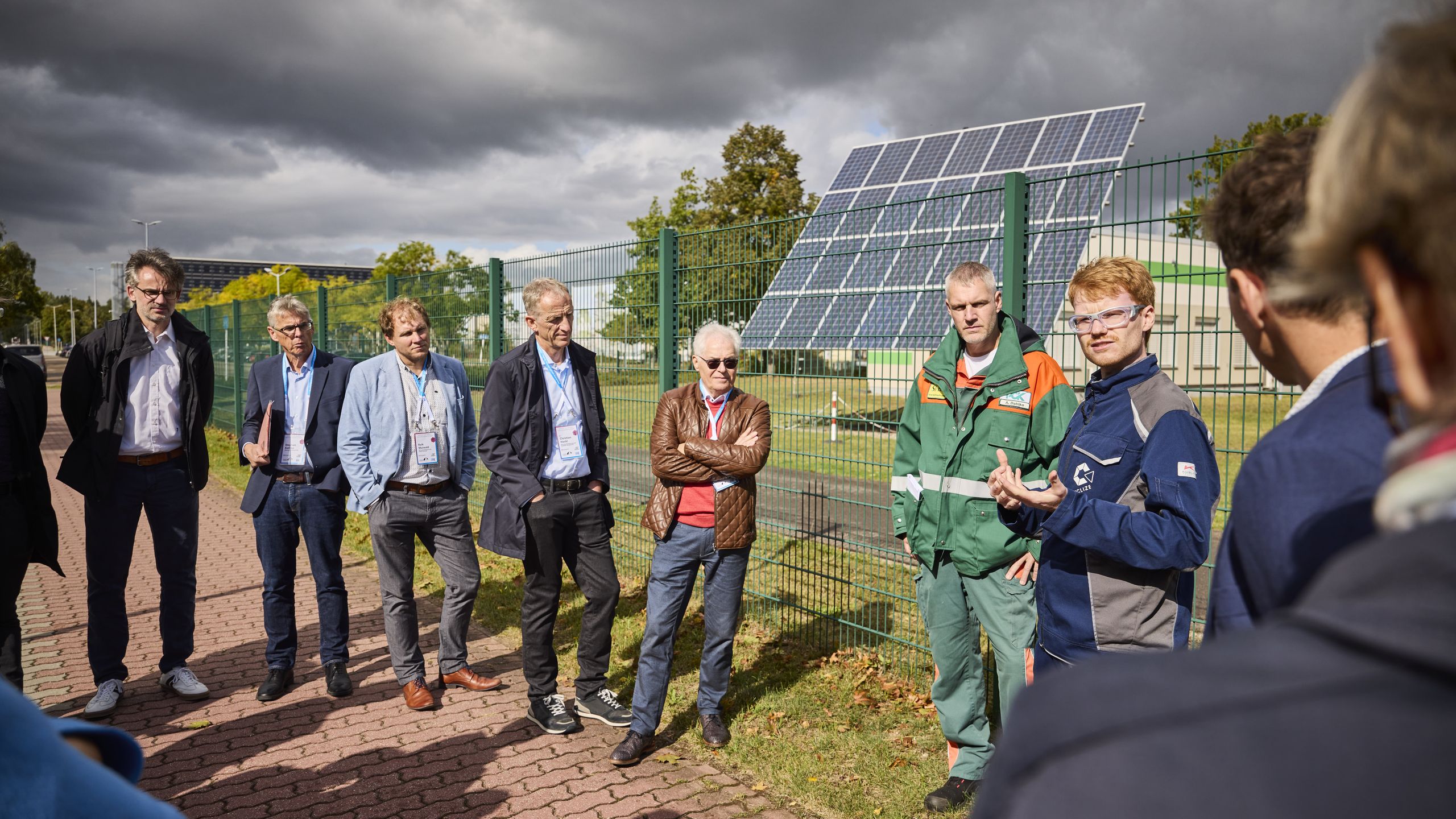
The startup Cyclize aims to bring carbon from hard-to-recycle waste back into circulation. The company has just commissioned a pilot plant at the PCK refinery in Schwedt/Oder. A visit to the site was part of the BMW Foundation Herbert Quandt's Werkstatt des Wandels in Schwedt. CEO and co-founder Maike Lambarth discusses toxic waste, strict regulations, and how to build something new without simply shutting down what already exists.
Cyclize’s first pilot plant at a chemical park has just started operating at the PCK site in Schwedt. What does it need to prove now?Maike Lambarth: First of all, that it does its job, ideally for as long as possible without interruption. We have already shown that we can establish ourselves at an industrial site and safely commission the plant there. Now we want to collect data over several months and demonstrate that the technology operates reliably over extended periods. At the same time, we are working with local partners to identify which local waste streams are technically and economically suitable for our process. Both things need to come together.You describe certain types of waste as the “problem children of the waste world.” What do you mean by that?There are types of waste for which we already have good recovery methods. We are particularly interested in those where that is not the case: highly mixed, toxic, or difficult-to-transport waste. A chemical industry site like the PCK refinery has several such waste streams. Together with the plant operators, we ask: What are their problem children? Where is there currently no good solution? We don’t want to compete with recovery methods that already work. Our goal is to bring the carbon back into circulation rather than simply burn the waste.
A startup bringing a new technology onto the sprawling grounds of a refinery: How difficult was it to get in?Of course, a chemical industry site has very strict safety requirements. Our plant must not pose a danger to itself or to neighboring plants. That was assessed externally. This involves risk assessments, operating manuals, and a hazard and operability study (HAZOP), which systematically examines what could happen in the worst case and how engineering measures can prevent those risks. But we don’t simply see these rules as burdensome bureaucracy. They provide a reliable framework and legal certainty. It is also important for us to show that we meet these requirements, including to future customers and investors.PCK represents a fossil-based heavy industry. You are bringing a young company and an innovative technology for keeping carbon in circulation. Are these two worlds meeting?I have found the people we work with incredibly open and welcoming, from management and the departments we work with directly to the training center and the people you meet around the site. I don’t take that for granted. After all, we’re from Stuttgart, not the region. At the same time, people here are very aware of the challenges facing the site. But there is also a strong sense of confidence: They know what they have here and what they can do.
Still, when you drive through the enormous PCK site and see your comparatively small pilot plant, you wonder: How can this ever reach an industrial scale?It can happen faster than you think. We started with a tiny reactor. In one of our first experiments, we put in a small piece of a Snickers wrapper to see whether we could get any measurable amount of gas out of it. Since then, we have already scaled up by a factor of more than 1,000. We still have a few more scaling steps ahead of us. I would say we are about halfway through that journey.
"We want to reconnect the end of the value chain with its beginning."
CEO, Cyclize
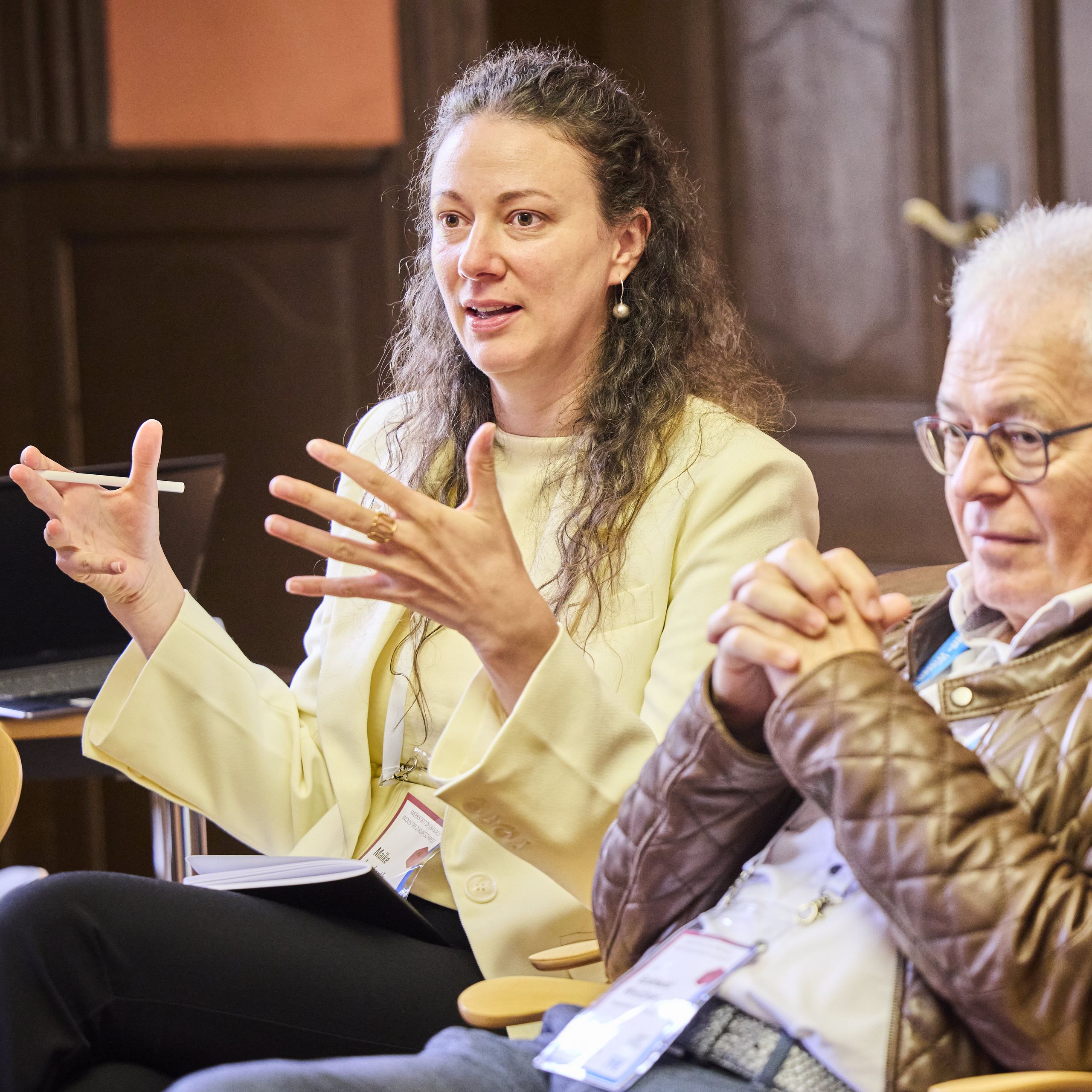
The region faces a dilemma: The existing refinery business has to keep operating reliably despite geopolitical crises, while something new is supposed to emerge at the same time. How do you resolve that tension?There is no simple answer. If you hold on only to what already exists, you can’t build anything new. But you can’t build a new system from scratch, either, because current needs still have to be met. Our approach is therefore to work with the companies already in the value chain rather than fundamentally question their role. We want to reconnect the end of the value chain with its beginning. The companies remain, but they change their raw materials. I believe this can make the transition happen faster and with less resistance.
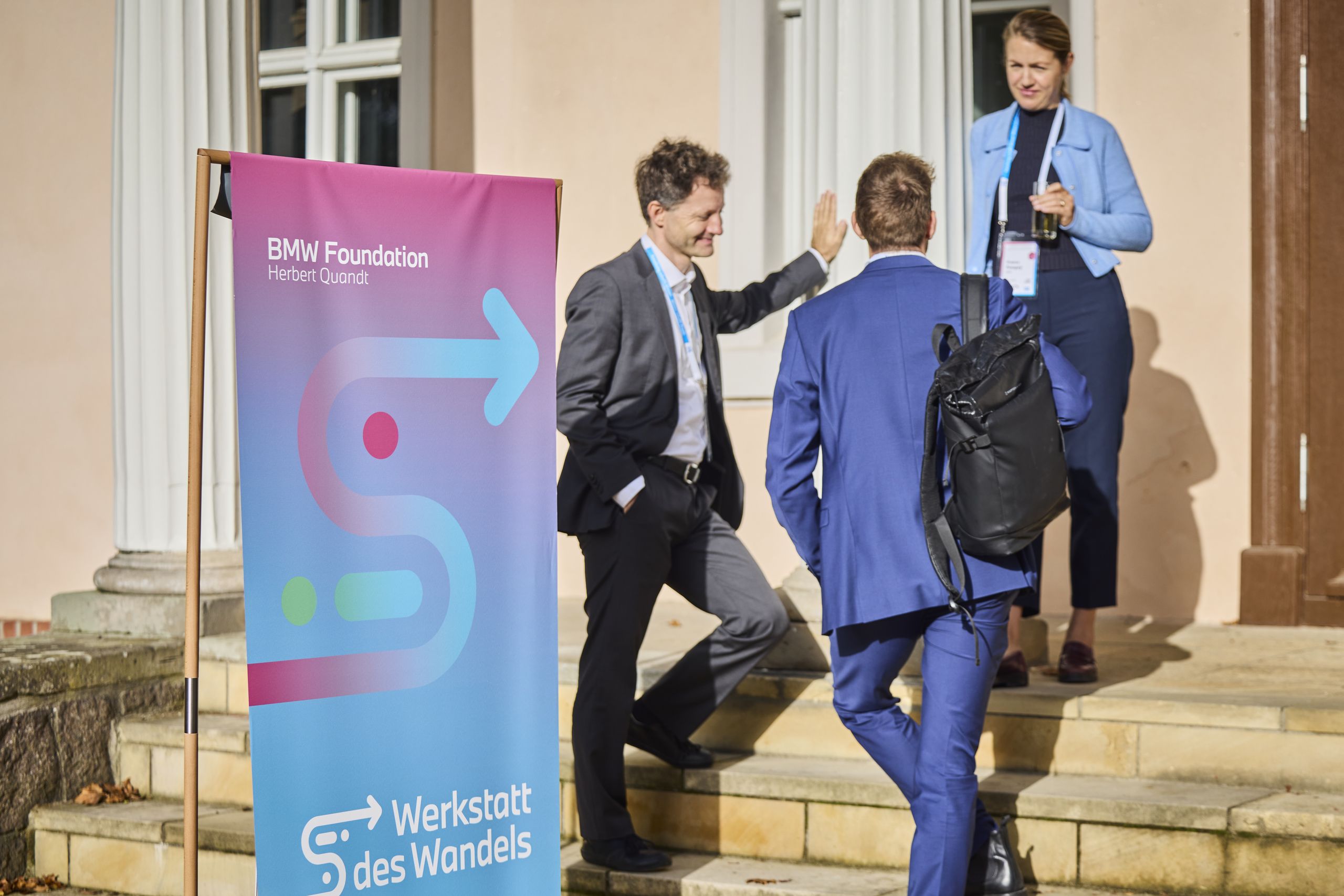
Participants in the Werkstatt des Wandels in Schwedt.
Marc Beckmann
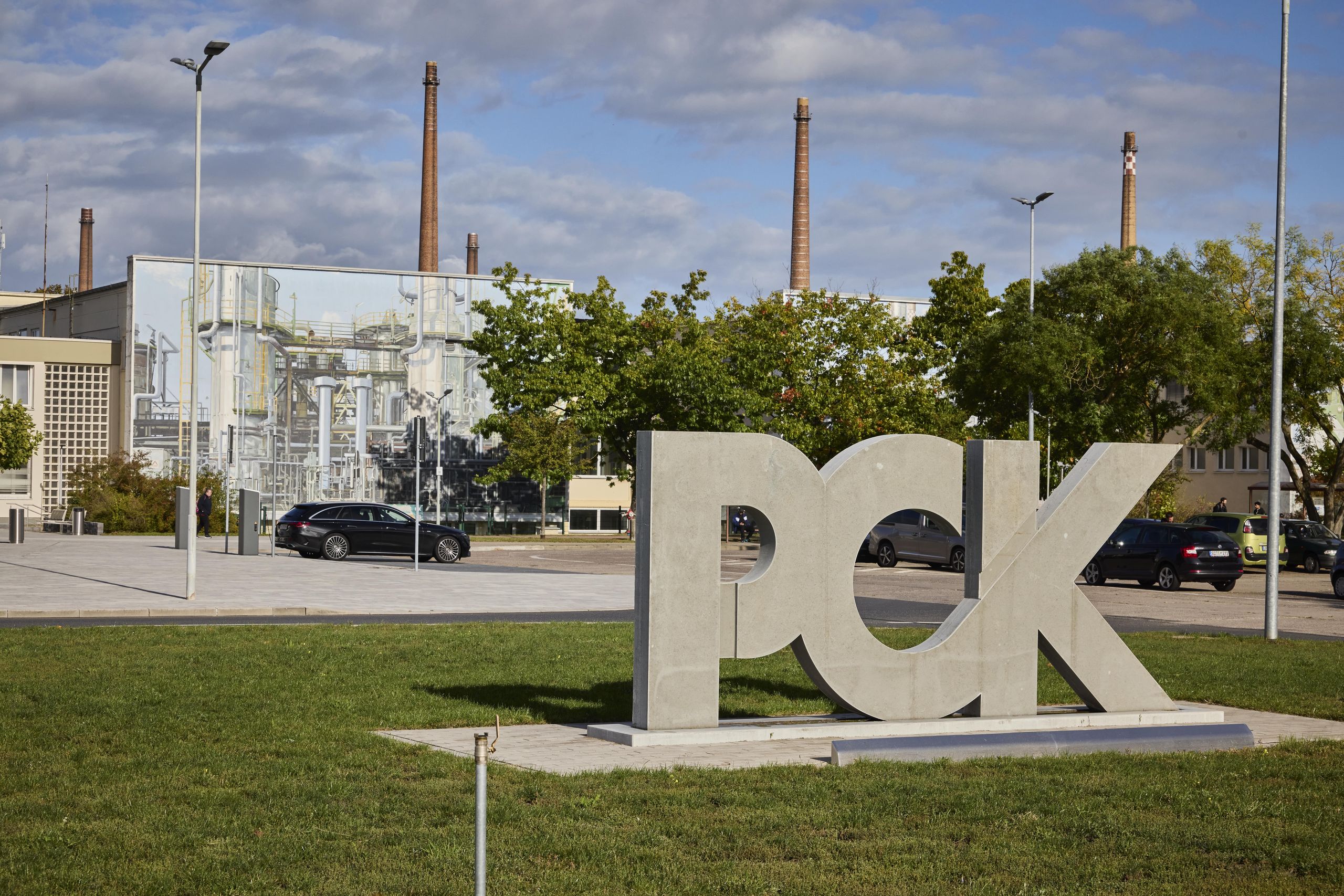
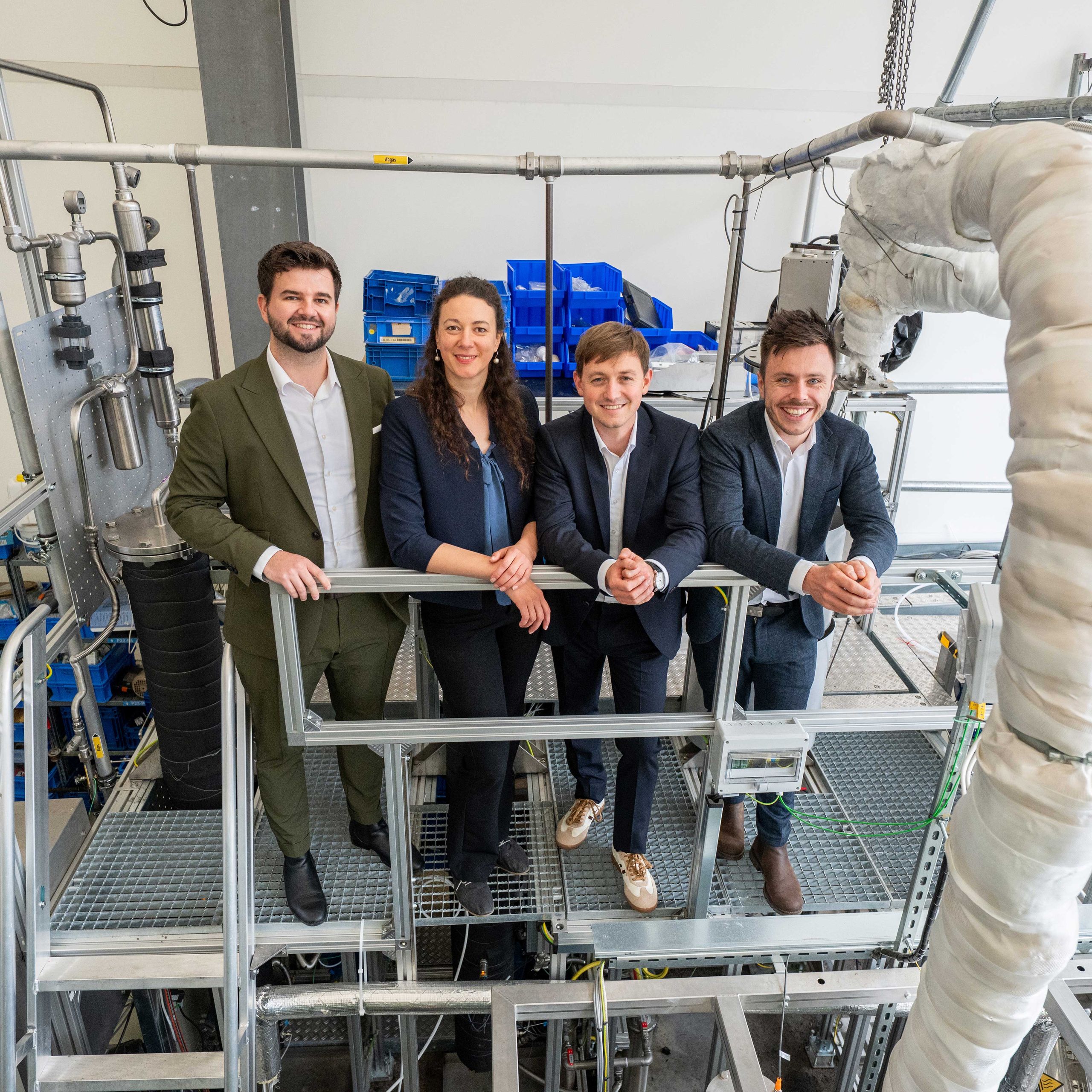
A site visit to the PCK refinery was part of the program.
Marc Beckmann
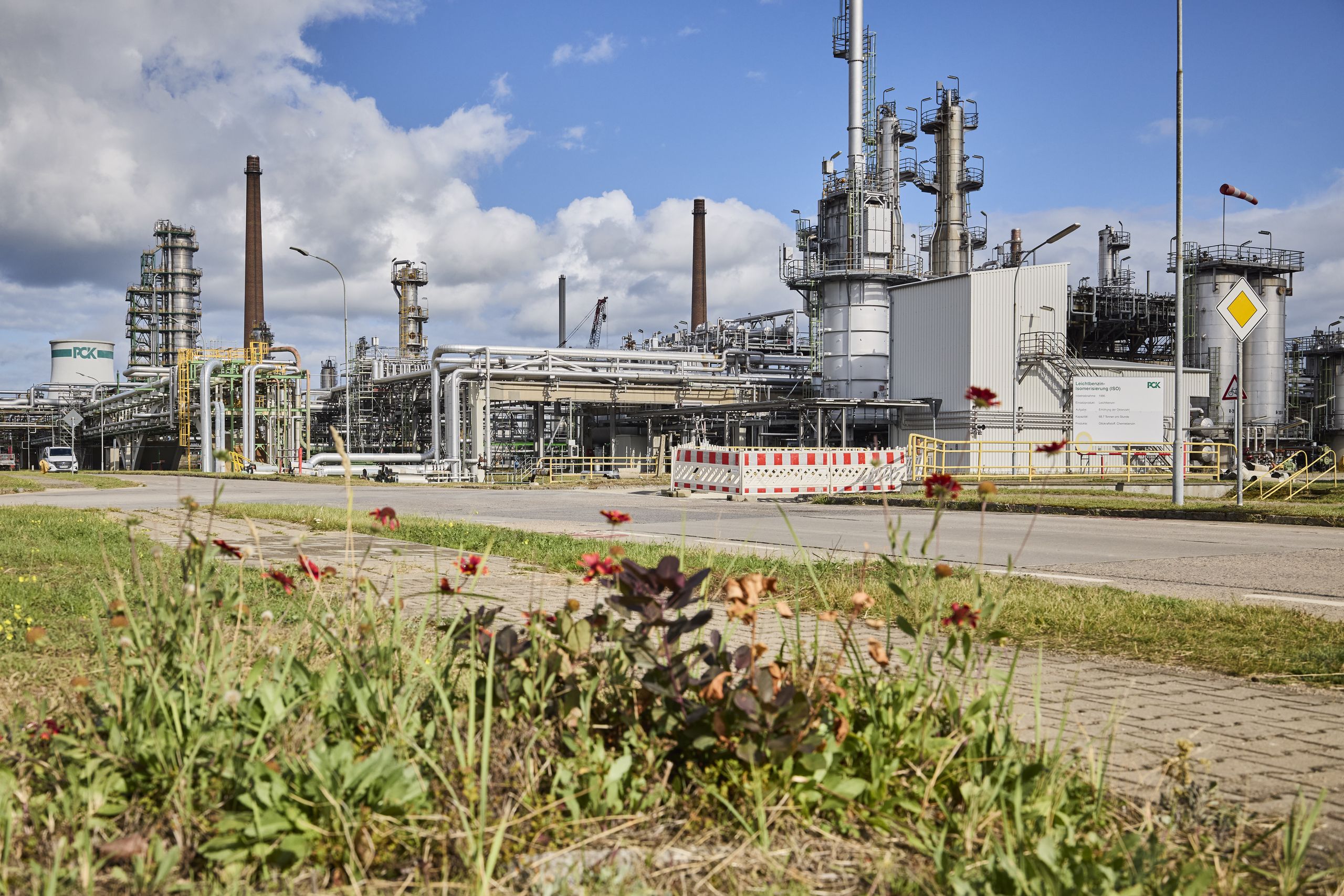
The PCK refinery in Schwedt plays a central role in the region’s energy supply, providing around 90 percent of the gasoline, diesel, jet fuel, and heating oil used in Berlin and Brandenburg.
Marc Beckmann
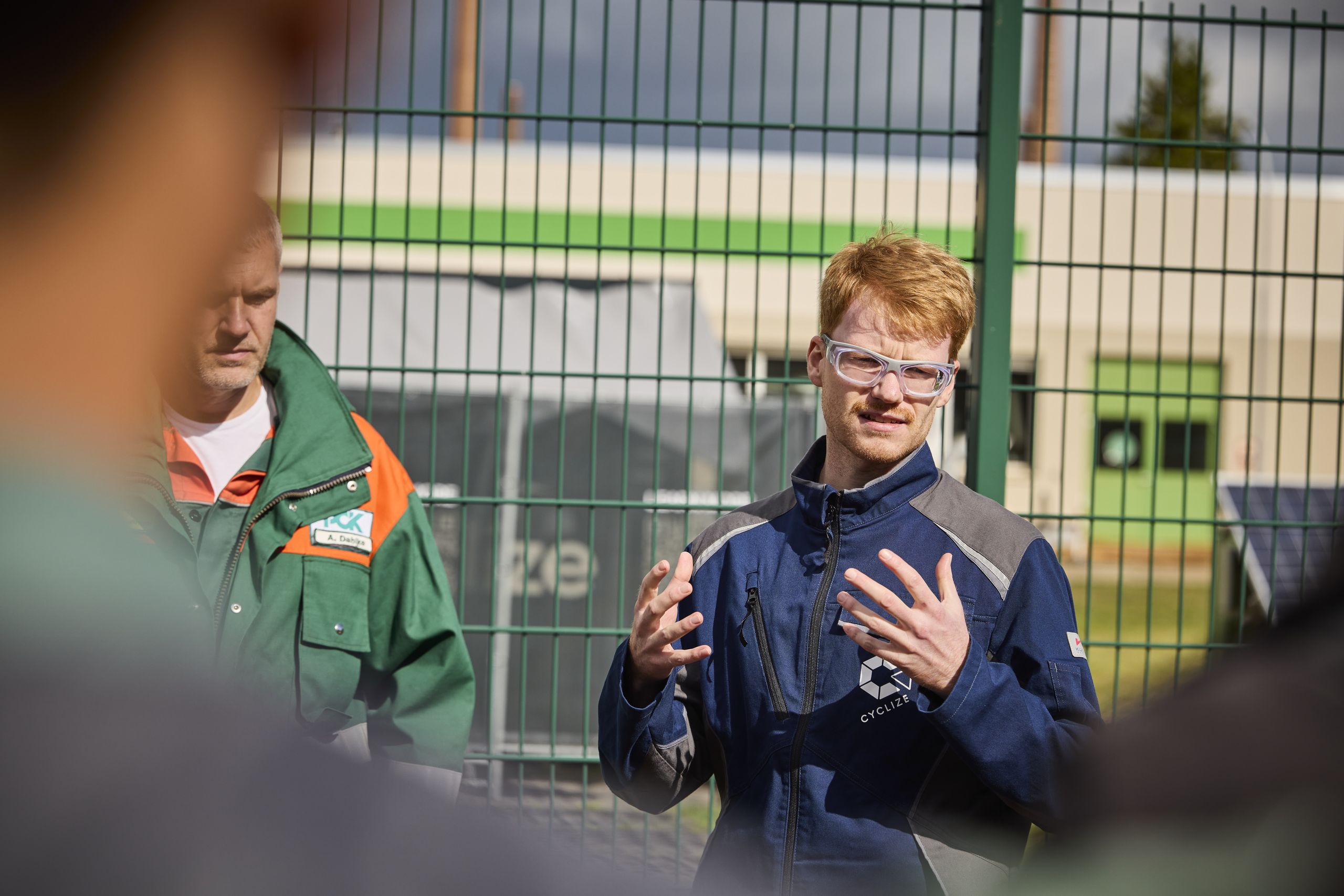
A Cyclize team member explains how the company’s first pilot plant at a chemical park works. The plant has just started operating at the PCK site.
Marc Beckmann
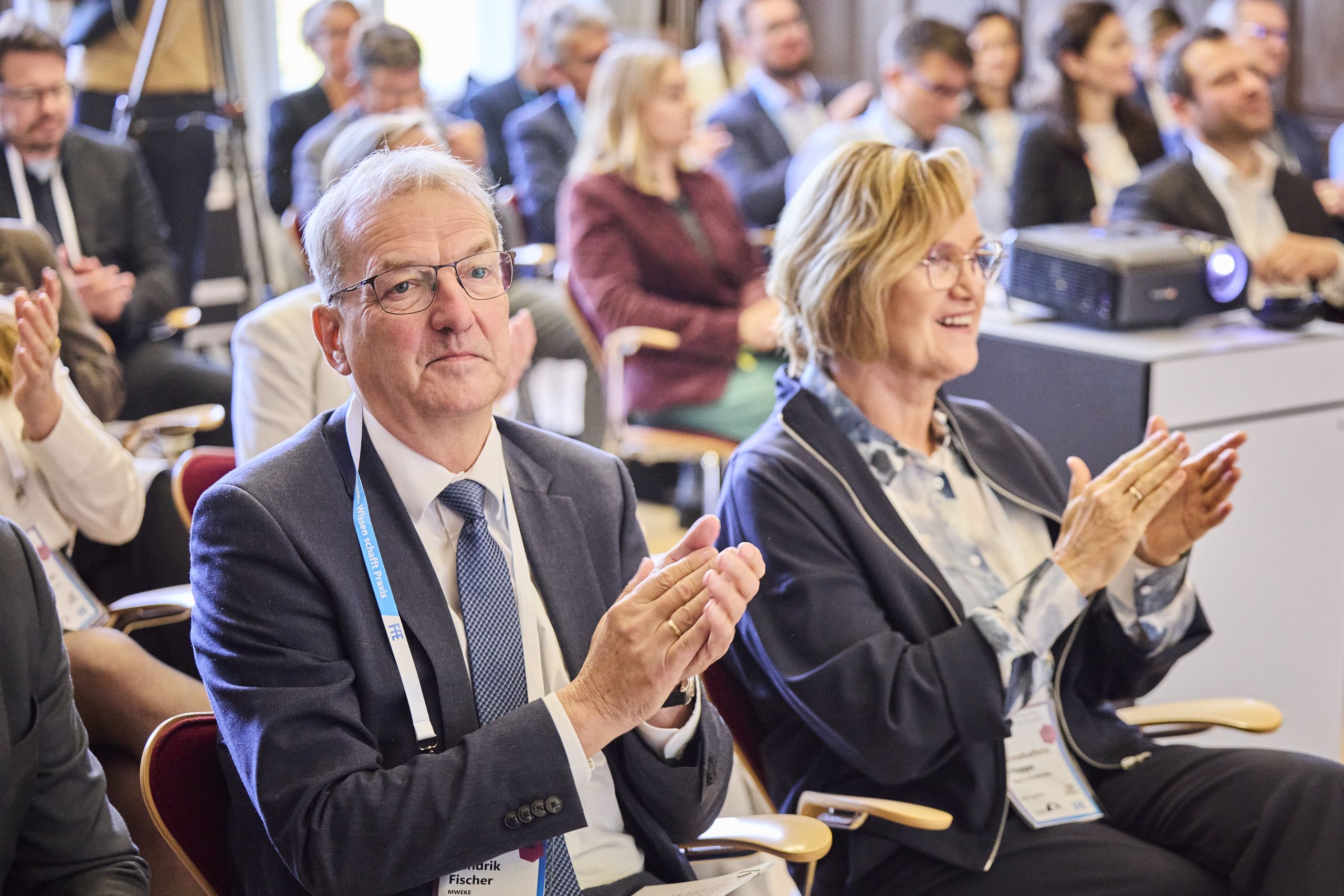
Hendrik Fischer, State Secretary at Brandenburg’s Ministry for Economic Affairs, Energy, Climate Action and European Affairs, and Annekathrin Hoppe, Mayor of Schwedt.
Marc Beckmann
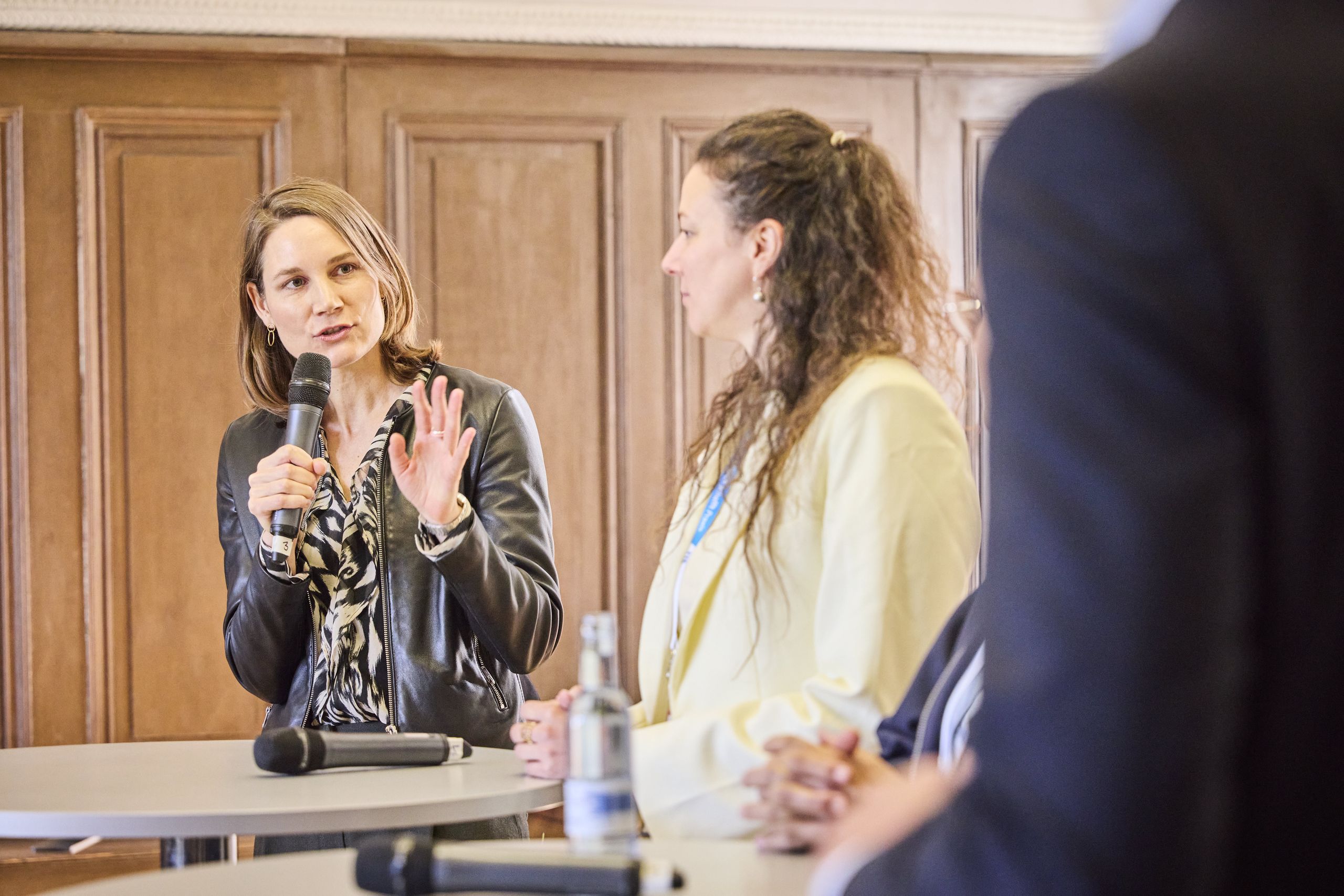
Verena Schüren (left), Director of the Taskforce Transformation at Germany Trade & Invest, was one of the panelists.
Marc Beckmann
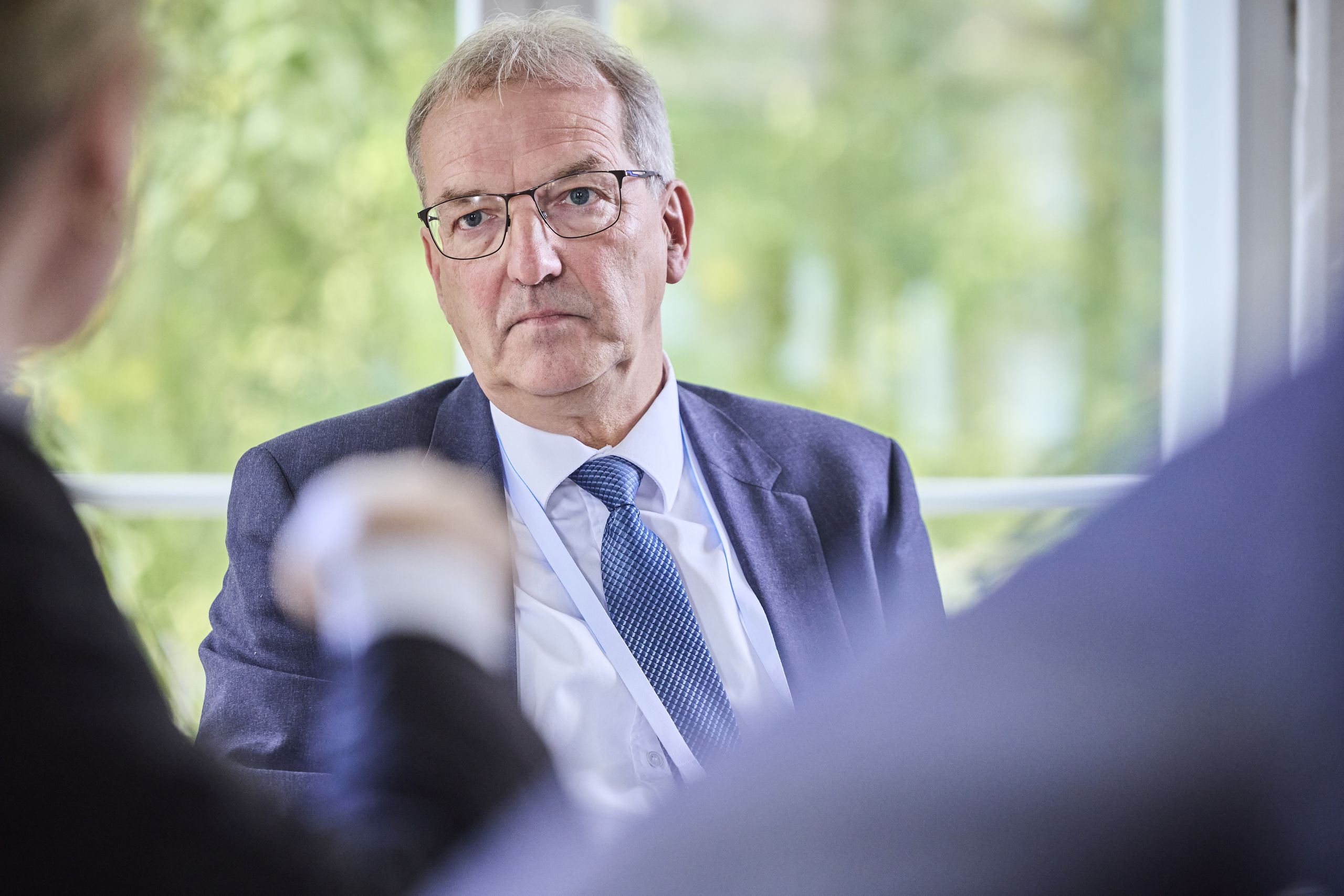
State Secretary Hendrik Fischer.
Marc Beckmann
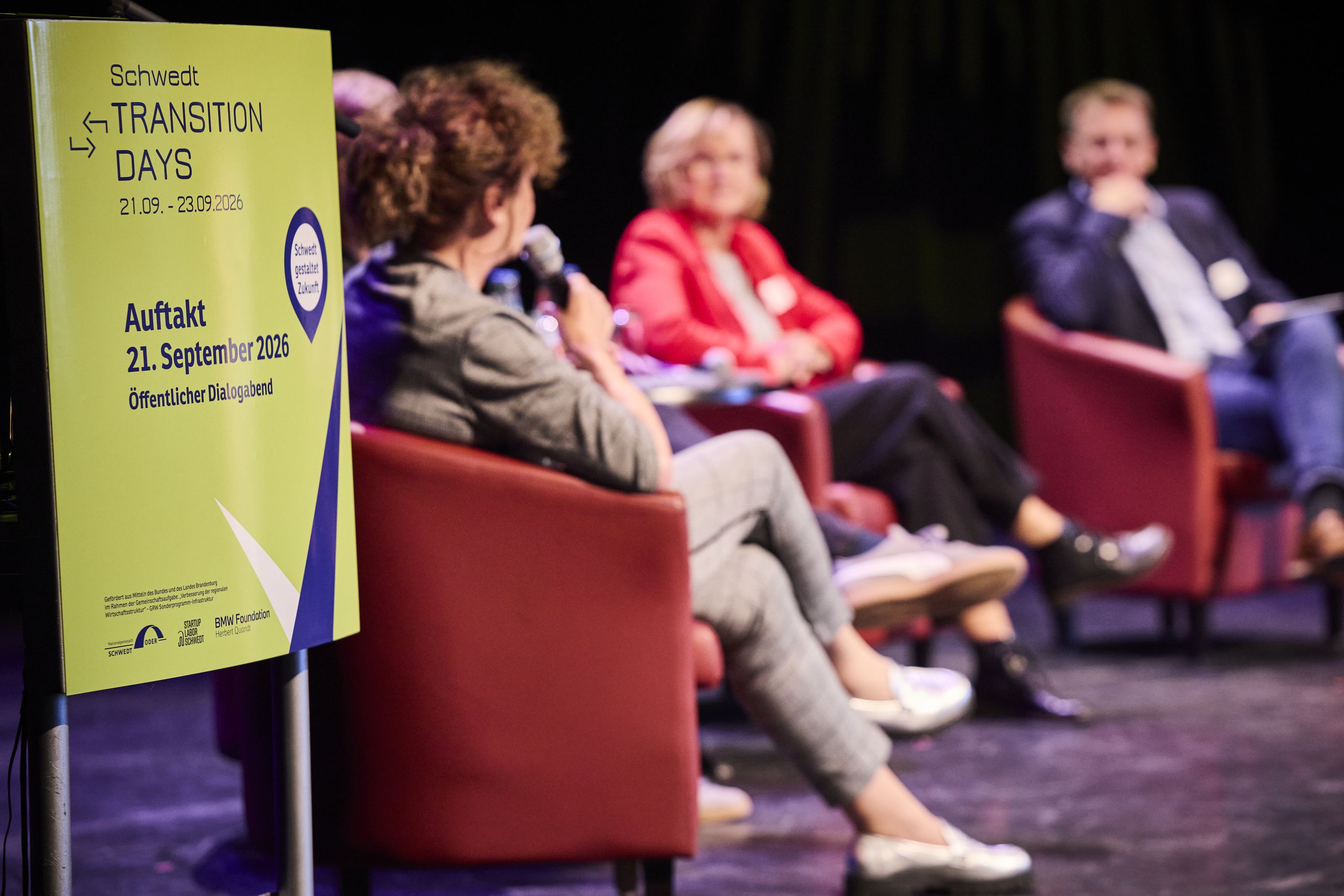
The Werkstatt des Wandels was part of the Schwedt Transition Days 2026.
Marc Beckmann
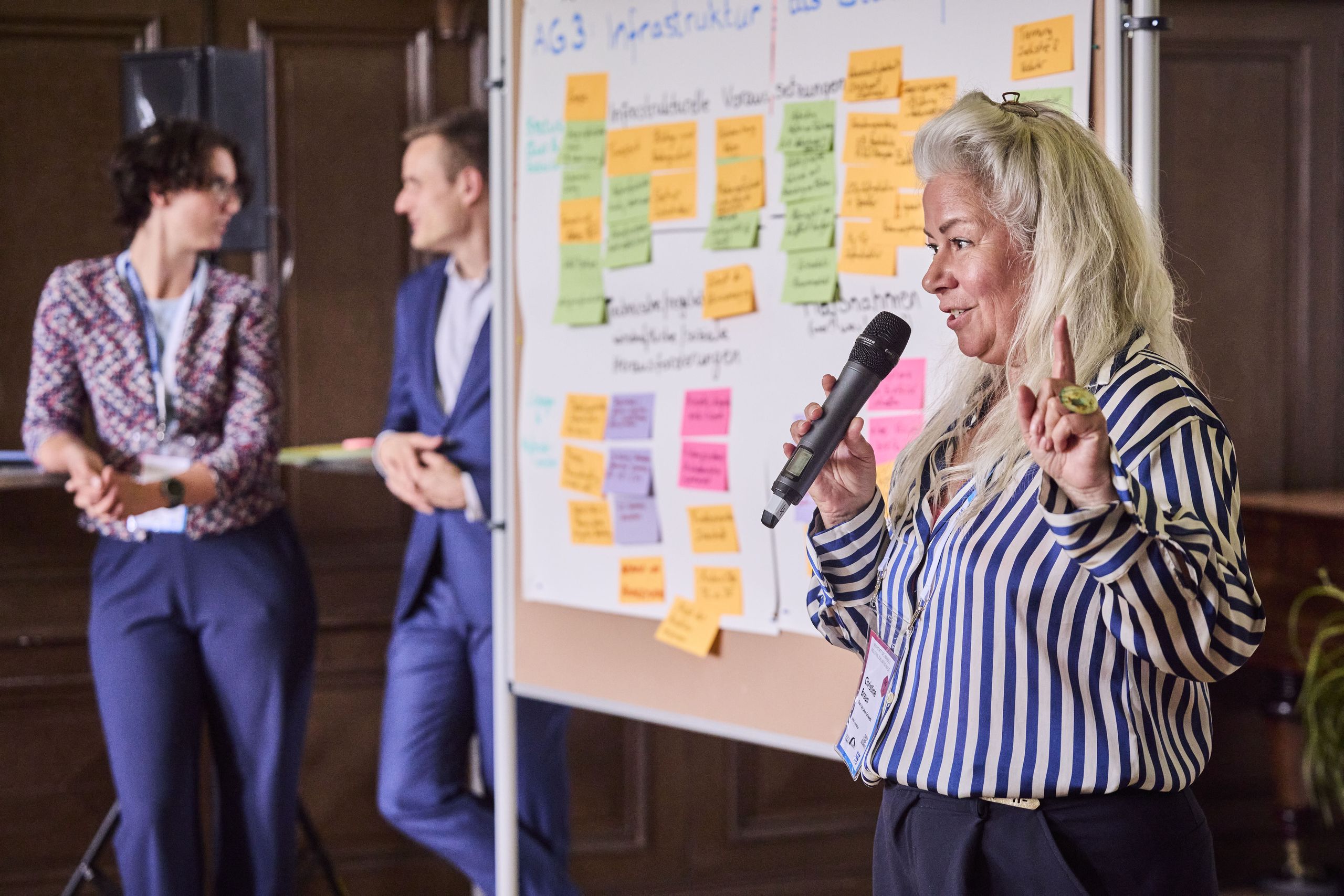
Chrissy Braun, who works in community engagement at Startup Labor Schwedt, talks to participants.
Marc Beckmann
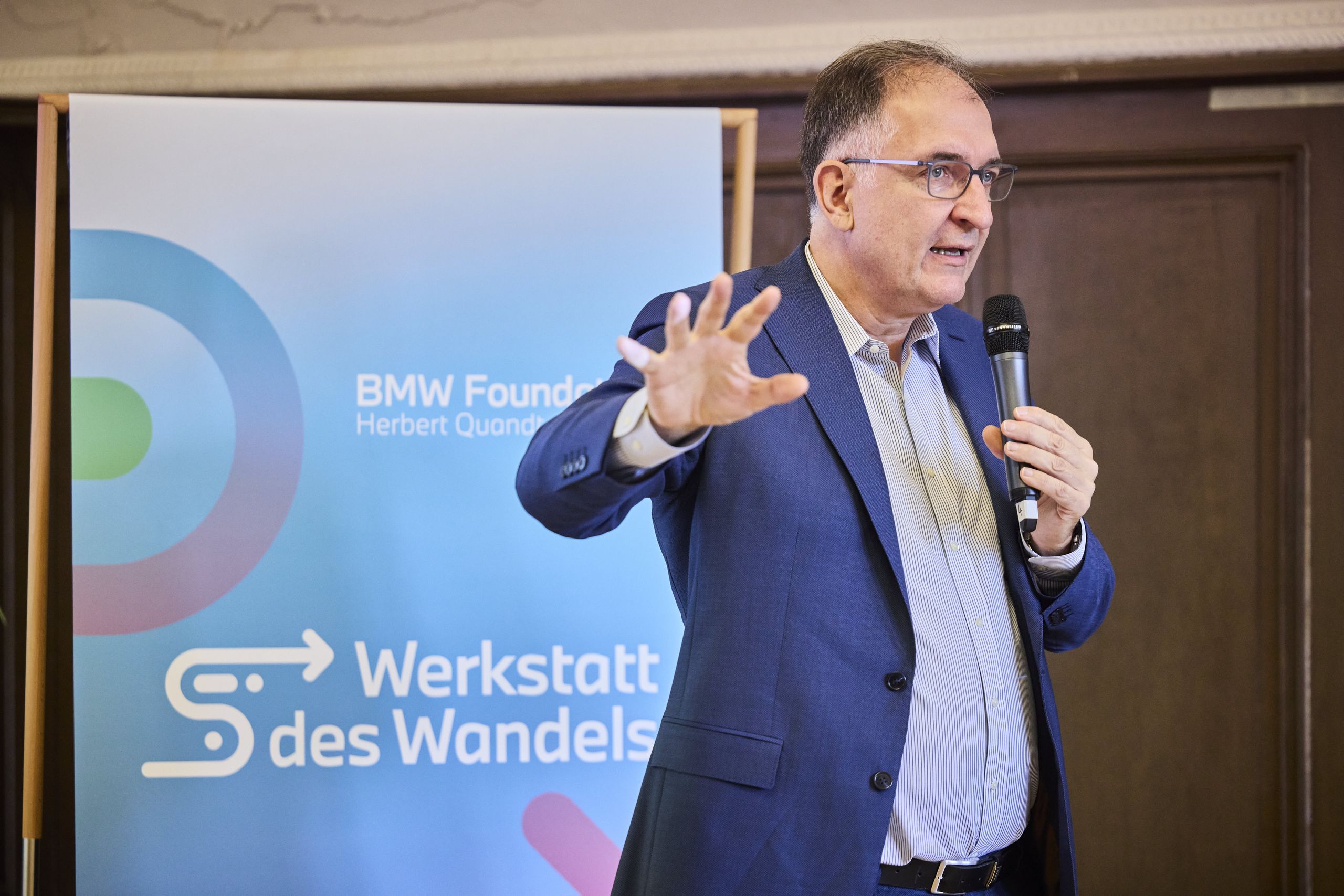
Peter Seeberger, Managing Director of the Max Planck Institute of Colloids and Interfaces in Potsdam, delivered one of the keynotes on the role of the chemical industry in Germany.
Marc Beckmann
Why Schwedt in particular?For one, Cyclize won the Startup Challenge organized by Startup Labor Schwedt in 2025. The site also offers space, industrial experience, and the relevant skilled workers and vocational training programs. There are also funding opportunities and partners along the value chain. Another decisive factor for us was that we could establish operations quickly and easily. That is enormously important for a startup. And of course, our goal is not just to test a pilot plant here. In the long term, we also want to operate larger industrial plants at this site.