Urbanization & Infrastructure
From Ambition to Implementation: Scaling Urban Decarbonization in Europe
Marc Beckmann
How can climate solutions in cities be scaled more effectively? The City-Industry Dialogue on Energy & Materials Security brought together 25 city leaders, experts from industry and academia, and investors to explore how Europe can accelerate decarbonization in cities while strengthening competitiveness, resilience, and energy security. The event took place during this year’s Munich Security Conference and in the context of the BMW Foundation’s “Future Urban Living” program.
Energy & Materials
This dialogue is part of the City-Industry Dialogue process which has been initiated and facilitated by Climate KIC, ICLEI Europe, and the World Business Council for Sustainable Development with the support of the BMW Foundation. The process seeks to explore how urban decarbonization can help create lead markets for climate solutions in Europe.
Participants emphasized that Europe’s energy transition increasingly depends on both expanding clean energy generation and improving system integration. While renewable deployment continues to expand, projects are slowed by lengthy permitting timelines, fragmented infrastructure planning, and electricity pricing mechanisms still linked to fossil fuel markets, which limit cost predictability and investment confidence. Examples provided by participants illustrated how coordinated approaches can address these constraints. One example is Reykjavík’s geothermal district heating system. It eliminates fossil fuels through long-term municipal leadership, infrastructure investment, and collaboration with private actors, creating stable supply and reduced costs over time. Another example is offshore wind developments linked to cross-border transmission in the Baltic region. They show that generation projects depend as much on grid interconnection and shared planning frameworks as on generation technology itself. The Bornholm Energy Island project in the Baltic Sea was cited as an illustration of this approach, combining large-scale offshore wind generation with new transmission links connecting several European electricity markets. These examples indicate that scaling electrification of transport, heating, and industry is technically feasible; it depends, however, on aligning grid expansion, simplifying permitting processes, and coordinating market signals across jurisdictions. This way, clean energy can be deployed and utilized reliably.
Participants emphasized that Europe’s energy transition increasingly depends on both expanding clean energy generation and improving system integration. While renewable deployment continues to expand, projects are slowed by lengthy permitting timelines, fragmented infrastructure planning, and electricity pricing mechanisms still linked to fossil fuel markets, which limit cost predictability and investment confidence. Examples provided by participants illustrated how coordinated approaches can address these constraints. One example is Reykjavík’s geothermal district heating system. It eliminates fossil fuels through long-term municipal leadership, infrastructure investment, and collaboration with private actors, creating stable supply and reduced costs over time. Another example is offshore wind developments linked to cross-border transmission in the Baltic region. They show that generation projects depend as much on grid interconnection and shared planning frameworks as on generation technology itself. The Bornholm Energy Island project in the Baltic Sea was cited as an illustration of this approach, combining large-scale offshore wind generation with new transmission links connecting several European electricity markets. These examples indicate that scaling electrification of transport, heating, and industry is technically feasible; it depends, however, on aligning grid expansion, simplifying permitting processes, and coordinating market signals across jurisdictions. This way, clean energy can be deployed and utilized reliably.
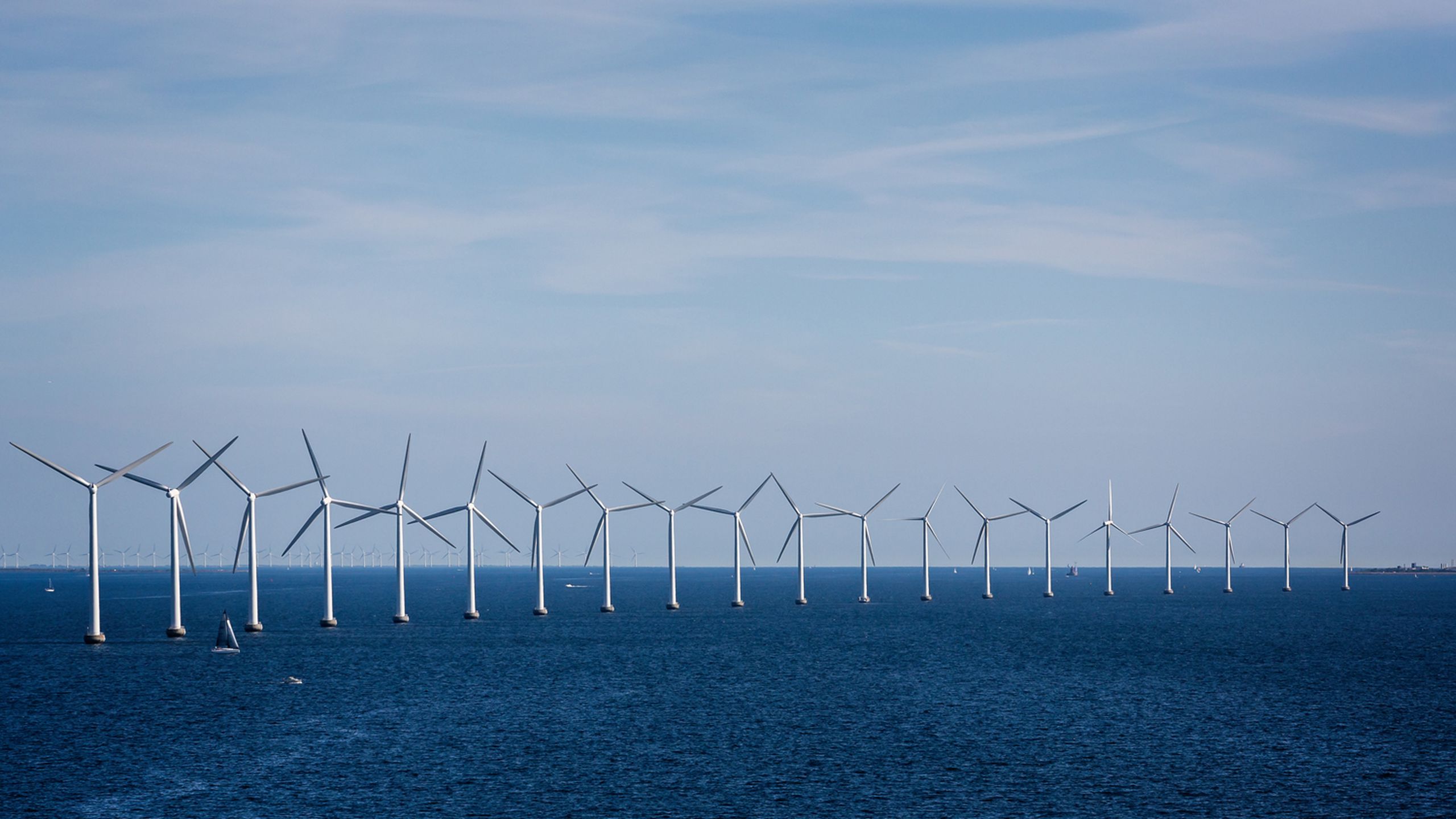
Offshore wind farm in the Baltic Sea off the coast of Copenhagen, Denmark
Adobe Stock

Geothermal power plant in Iceland
Adobe Stock
Transport & Mobility
City representatives highlighted that mobility transitions are driven primarily by demonstrably delivering greater reliability, affordability, and convenience. Behavioral change tends to occur when a range of transport options – including public transport, cycling, walking, shared mobility, and private vehicles – are well integrated, predictable, and convenient, allowing people to choose.
- Paris (France) combines cycling infrastructure, low-emission zones, and parking reform at district level, demonstrating how coordinated measures can shift travel behavior while supporting local economic activity.
- Rotterdam (The Netherlands) links port expansion with environmental restoration and regional EV charging corridors, enabling freight transitions across a wider metropolitan system.
- Rzeszów (Poland) improves uptake of public transport through gradual fleet modernization and intelligent transport systems that enhance reliability, travel time, and passenger information.

Built Environment
Building decarbonization is constrained less by technical solutions than by delivery capacity and coordination, as well as readily available and accessible investment capital. Renovation progress remains slow due to fragmented procurement, limited standardization, and shortages of skilled workers across retrofit supply chains. Participants highlighted that the scale of necessary renovation across European cities will require a significant expansion of trained installers and technicians, particularly for heat pump installation and building retrofits. Circular renovation practices demonstrated how recovering and reusing materials can reduce emissions and material demand while lowering lifecycle costs. City representatives also reported stronger homeowner participation where local advisory hubs and outreach programs helped residents navigate renovation decisions and financing options. Energy efficiency measures were highlighted for reducing peak demand on energy systems while improving indoor comfort, health, and learning outcomes. Participants noted that improvements to school buildings, including better insulation and acoustics, can both reduce energy demand and improve learning environments for students. Overall, the discussions suggested that scaling renovation depends on predictable project pipelines, coordinated supply chains, and expanded workforce capacity. Without these delivery conditions, implementation will continue to lag despite available technologies and funding.
Finance
Investors shared examples of how capital is quite readily available for energy efficiency opportunities where the cost of substitution can pay for itself, but faster transition is held back by uncertainty around regulatory stability and future demand predictability. Infrastructure and efficiency investments require certain long-term revenue streams, yet fragmented procurement timelines and changing policy frameworks continue to increase perceived risk. Participants noted that investors often require clearer visibility of future project pipelines before committing capital at scale, particularly in sectors where infrastructure investment and technology deployment are closely linked. Commercial opportunities were identified in electrified bus fleets, heat pumps for commercial buildings, rooftop solar, battery storage, and low-carbon materials. Participants noted that such projects become more easily financeable when demand is visible at sufficient scale and supported by stable policy signals. Coordinated commitments from cities were therefore seen as more effective in unlocking investments than subsidies alone. Participants also noted that shifting the focus from supply-side technology deployment to stronger demand signals can significantly improve the bankability of these projects. The discussion underscored that the central financial challenge is not capital availability but investment confidence. When demand is predictable and regulatory conditions are stable, private capital will flow more readily into deployment.

Key Takeaways and Opportunities
The discussions highlighted several practical areas where continued collaboration between cities, industry, and investors could accelerate implementation and translate existing solutions into deployable projects. These insights reflect the need to better align urban demand, industrial supply chains, and investment conditions to scale climate solutions more effectively.
- Coordinating city demand to enable investment at scale: Cities, if effectively mobilized, can collectively represent substantial procurement power across transport, buildings, and energy systems, and materials transformation opportunity spaces. Sending joint demand signals through aligned or group city procurement and contracting for materials can provide clearer visibility of future needs. Combined with more supportive policy and regulatory frameworks, this approach can reduce costs, strengthen supply-chain certainty, and enable investors to finance projects that would otherwise remain too small or uncertain. Greater coordination between cities could also create more predictable markets for emerging technologies and low-carbon materials, helping to accelerate deployment and strengthen industrial supply chains.
- Aligning infrastructure investment with urban planning: Energy grids, mobility infrastructure, and building upgrades operate interdependently but are often planned separately. Closer alignment between infrastructure investment and city planning can ensure that projects reinforce one another. This supports electrification, efficiency, and resilience while avoiding bottlenecks that slow deployment. Integrated planning across sectors can also help maximize the value of infrastructure investments and support more resilient urban systems.
- Delivering integrated projects with economic and social benefits: Examples from cities showed that initiatives linking environmental improvements with economic activity or community outcomes gained stronger support and delivered broader value. We heard examples showing that health and education outcomes are improved when physical environmental considerations have been addressed. Designing projects to address multiple objectives such as mobility, local economic development, or environmental restoration can increase acceptance, attract partners, and reduce implementation risks. Integrated projects can therefore generate economic, environmental, and social benefits simultaneously.
- Using city demand to accelerate market uptake: Visible, structured demand from cities and their private sector partners can help markets scale more quickly by signaling where adoption will occur and at what pace. Participants emphasized the importance of shifting the focus from a supply-driven perspective toward one that actively structures and aggregates demand, with cities playing a central role in shaping markets for energy efficiency, electrified transport, and circular materials. Cities can shape demand through their procurement strategies, planning decisions, and engagement with local businesses and citizens. They can use these tools to increase demand for energy efficiency, electrified transport, and circular materials. Clear demand signals can encourage suppliers and investors to respond with greater confidence.
- Expanding local workforce capacity for implementation: Across sectors, deployment depends on the availability of trained installers, technicians, and planners. Partnerships between cities, industry, and education providers can expand training pathways and create clearer pipelines of skilled workers, ensuring that projects move from planning to delivery while supporting locally anchored employment. Strengthening workforce capacity was highlighted as a critical enabler of the transition.
Closing Summary
The discussions during the dialogue highlighted that many of the technologies and solutions required for urban decarbonization already exist. The key challenge lies in aligning demand, infrastructure planning, supply chains, and investment conditions so that these solutions can be deployed at scale. Despite covering only 2% of the world’s surface, cities consume 78% of global energy and produce more than 60% of greenhouse gas emissions. They are home to the majority of Europe’s population and play a critical role in the transition to decarbonized and resilient communities. Through infrastructure investment, procurement decisions and urban planning, they generate significant demand for low-carbon technologies, materials, and services. When this demand becomes visible and coordinated across multiple cities, it can create the conditions for lead markets to emerge. Lead markets develop where demand for new solutions becomes sufficiently visible and sustained to encourage innovation, investment, and supply chain development. By aligning city demand with industrial capabilities and financial investment, cities can help accelerate the deployment of climate solutions while strengthening European competitiveness and industrial capacity. The discussions also reflected growing momentum among cities, industry leaders, and financial actors to collaborate more closely in shaping emerging lead markets for climate solutions. Strengthening this dialogue can help identify where coordinated action may unlock new markets, address systemic barriers, and translate urban climate commitments into investment-ready opportunities. Next Steps
- Participants are being invited to continue their engagement in the next phases of the City–Industry work on lead markets.
- Building on the discussions during the dialogue, the next phase of the work will focus on translating these insights into more tangible, specific opportunities for collaboration between cities, industry, and financial actors. This includes exploring how coordinated demand, integrated infrastructure planning, and workforce development can spawn the market launch of lead markets for climate solutions.
- By continuing this dialogue and building on the relationships established through the dialogue, the City-Industry process aims to move from discussion toward identifying practical pathways for implementation and supporting the development of lead markets for climate solutions across Europe.