Innovation
Europe Risks Losing Cleantech Leadership Without Scale-Up Support
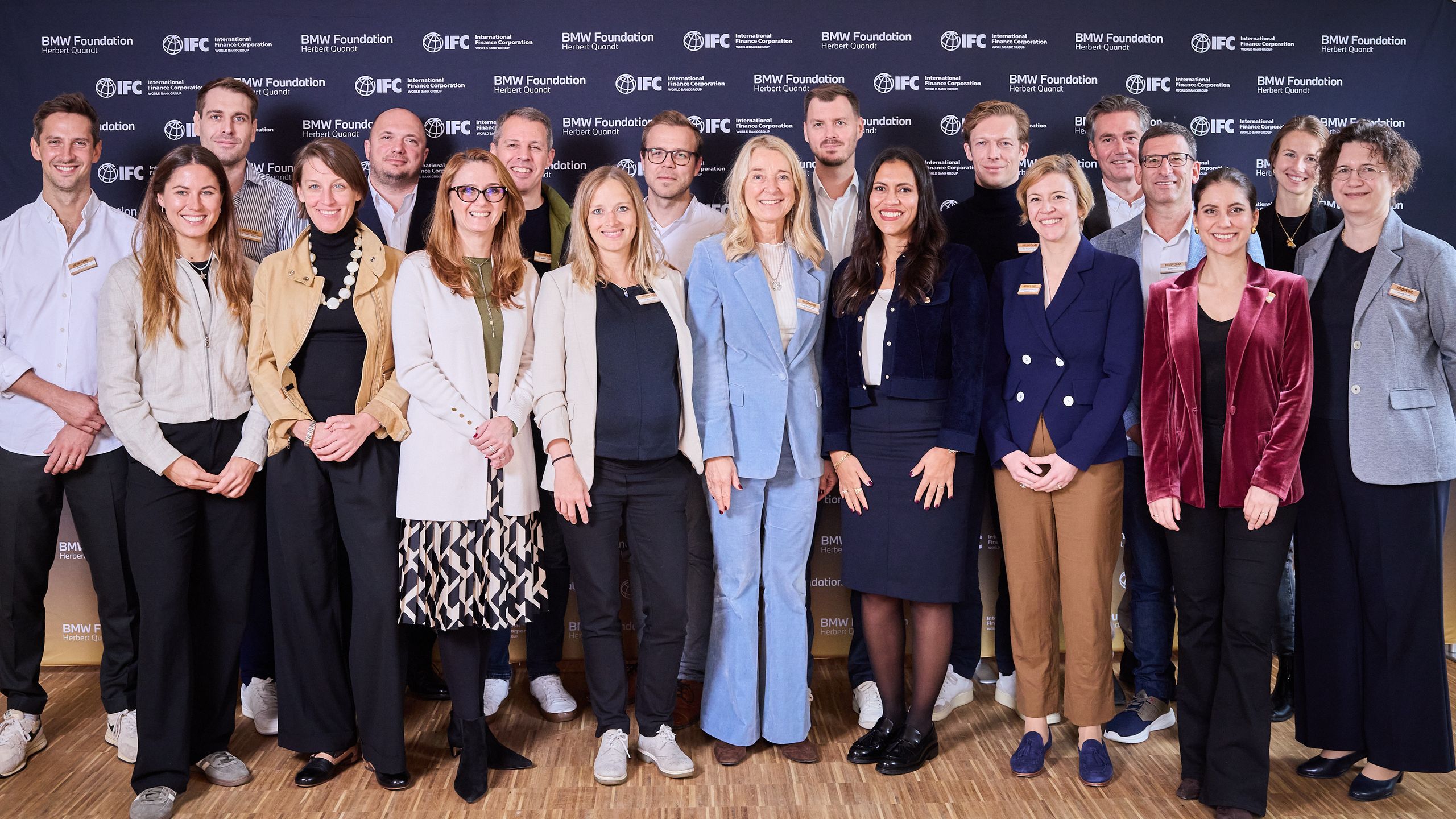
Europe leads the world in clean technology innovation, but without the ability to scale industrial solutions, it risks falling behind the U.S. and China in the race to decarbonize. To close this critical “scale-up gap,” the BMW Foundation Herbert Quandt and the International Finance Corporation (IFC), a member of the World Bank Group, today announced the launch of the RESPOND Scaleup program, a six-month pilot initiative designed to help CEOs of leading clean-tech startups to navigate the complexities of scaling to full commercialization.
Building on the success of the RESPOND Accelerator, which has supported more than 65 impactdriven startups since 2020, RESPOND Scaleup targets the critical growth phase. The program supports founders in industrializing their technologies, scaling their teams, and expanding internationally – thereby making an important contribution to the successful implementation of the energy transition. By focusing on asset-heavy, capital-intensive hardware innovations, such as advanced energy storage, clean fuels, and low-carbon industrial processes, the program addresses a major bottleneck in Europe’s competitiveness and industrial decarbonization efforts. These technologies are essential for ensuring that Europe remains a leader in the global clean energy transition and can advance its competitiveness and sustainability across hard-to-abate sectors. By scaling innovative technologies into emerging markets, European pioneers can help catalyze global decarbonization while working toward more resilient and robust supply chains. “The energy transition is within our technological reach – and it’s even a driver of innovation. But only through implementation at scale can we build a truly innovative economy and a future-proof society. Europe’s challenge is not innovation – it’s scaling,” says Heba Aguib, Board Member of the BMW Foundation Herbert Quandt. “Scaling breakthrough clean technologies creates access to clean energy, quality jobs, and competitive growth opportunities,” adds Oksana Varodi, Regional Manager for MAS Europe Upstream at IFC. “IFC leverages capital and expertise to help founders deploy their solutions in Europe and emerging markets, driving innovation, competitiveness, and global impact.” Seven pioneering cleantech companies join the inaugural cohort The pilot cohort consists of seven breakthrough companies tackling decarbonization across energy, fuels, materials, and industrial processes:
About the International Finance Corporation (IFC)IFC, part of the World Bank Group, is the largest global development institution focused on the private sector in emerging markets. Working in over 100 countries, IFC uses its capital, expertise, and partnerships to create markets and opportunities, committing a record $71.7 billion in FY2025 to advance sustainable, inclusive growth worldwide. For more information, visit www.ifc.org
- Cylib (Germany) pioneers a water-based battery recycling process that recovers over 90% of critical materials with 80% less CO₂ footprint than primary extraction.
- H2Pro (Israel) develops next-generation electrolyzers that enable affordable green hydrogen production through its patented membraneless DWE (decoupled water eletrolysis) technology.
- Ineratec (Germany) produces carbon-neutral e-fuels and e-chemicals from renewable hydrogen and captured CO₂, offering sustainable alternatives for aviation and industry.
- Kraftblock (Germany) provides scalable thermal energy storage up to 1,300°C, enabling carbon-free industrial heat for sectors from food to steel.
- Meva Energy (Sweden) uses biomass gasification to convert wood residues into low-cost biogas and biochar, replacing fossil gas in manufacturing.
- Prime Batteries (Romania) designs and manufactures advanced lithium-ion energy storage systems for e-mobility and industrial applications.
- Traceless Materials (Germany) transforms agricultural residues into a new class of plasticfree, home-compostable materials designed to replace conventional plastics at scale.
About the International Finance Corporation (IFC)IFC, part of the World Bank Group, is the largest global development institution focused on the private sector in emerging markets. Working in over 100 countries, IFC uses its capital, expertise, and partnerships to create markets and opportunities, committing a record $71.7 billion in FY2025 to advance sustainable, inclusive growth worldwide. For more information, visit www.ifc.org
Your Press Contact

Esben Ehrenreich
BMW Foundation
Subscribe to our newsletter for news, upcoming events and impactful insights.